Prague Fire Rescue Service Gets a New 517 m² Home in Holešovice
Architektura's Prague Fire Rescue Service headquarters in Holešovice spans 517 m² and consolidates operations at an exposed intersection. David Kraus and Miroslav Styk led the 2025 design.
- Section
- Architecture
- Author
- By Grace Kim
- Filed
- Length
- 2 min read
Key takeaways
- The Prague Fire Rescue Service headquarters in Holešovice covers 517 m² and was completed in 2025.
- Architektura designed the complex, with David Kraus and Miroslav Styk as lead architects.
- The architects describe the project as civic infrastructure with a strong urban presence at a highly exposed intersection.
- The campus consolidates the Fire Rescue Service's operational and administrative functions under a long-term strategy.
- Filip Šlapal photographed the completed building.
Prague's Fire Rescue Service has a new 517-square-metre headquarters complex in Holešovice, completed in 2025 and designed by the firm Architektura, with David Kraus and Miroslav Styk as lead architects.
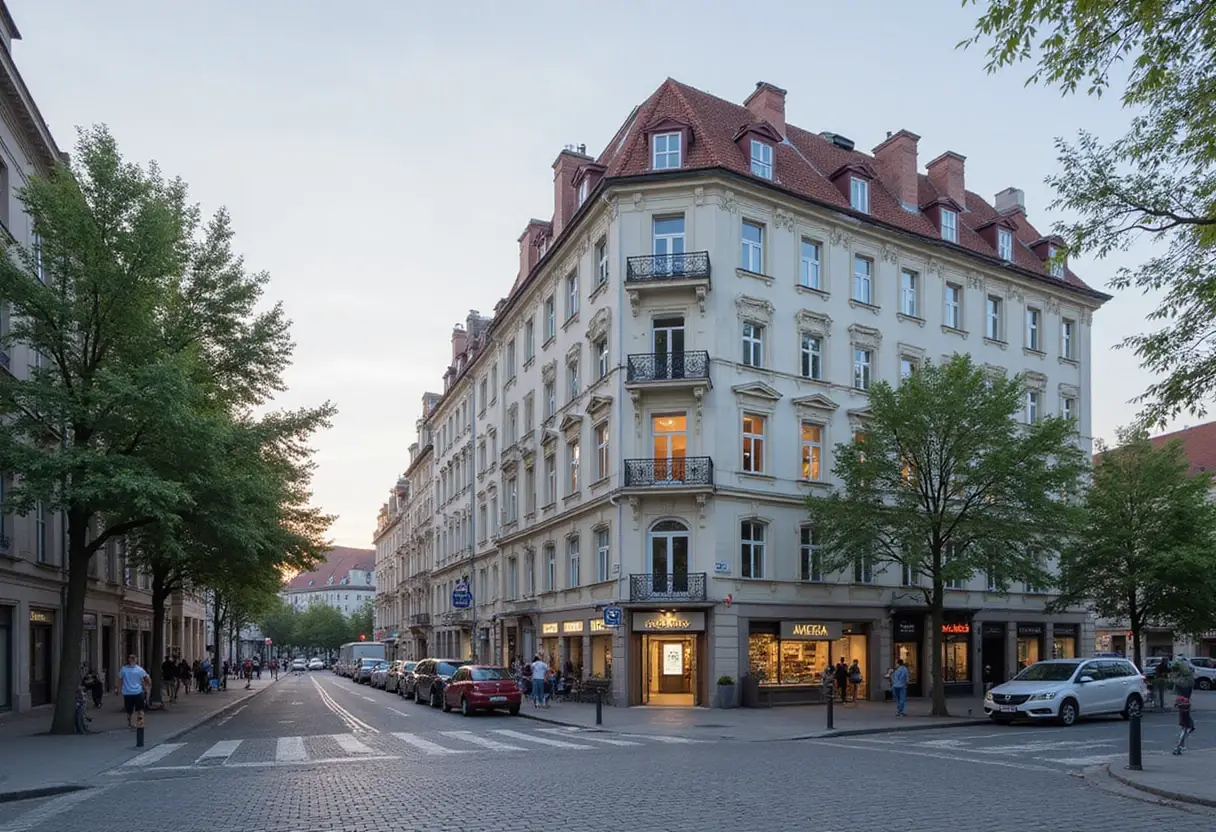
The building doesn't hide behind a fence. It sits at a highly exposed intersection, and the architects leaned into that. They conceived the project, as their text puts it, as "civic infrastructure anchored by a strong urban presence." In a city district where public buildings often turn their backs to the street, this one faces it.
Photographs by Filip Šlapal show the result: a compact, legible complex that reads as an operational campus rather than a single object building. The design consolidates what had been scattered functions into one coherent whole.
What does the project actually change?
For the Fire Rescue Service, it means consolidation. According to the architects, the project "develops a long-term strategy for the Fire Rescue Service to consolidate its operational and administrative functions within a coherent campus." Dispatch, administration and daily operations that previously demanded separate quarters now share a single organised site.
For the city, it means a corner of Holešovice gains a building with a "distinctly public architectural expression" — again the architects' words — at a junction where plenty of drivers and pedestrians pass every day. The brief called for clarity on the inside and civic presence on the outside, and the design answers both at once.
Who built it, and with what?
The delivery involved a long roster of Czech manufacturers and suppliers, which signals a largely domestic supply chain. The credited list includes:
- AbleTrade, B&V GIPS EU and B.V.A
- BELLE Bohemia, BR-INVEST and Barevný Svět Liberec
- Boušek, DASIP, DELTA SIGN and ENERGOMONT
- Euflooria, Eurocolor, FERI and Gramon Print
- ISOTRA PRO, KAREJA, MSV Liberec and Maron CZ
- Menard Zakládání Staveb and PODANÝ, among at least four others
That range — from foundation work (Menard Zakládání Staveb) to signage (DELTA SIGN) and printing (Gramon Print) — sketches the full scope of a functioning operational headquarters, not just an office fit-out.
A campus, not a monument
David Kraus and Miroslav Styk led the design at Architektura. Their stated priority was combining "clarity of organisation with a distinctly public architectural expression" — a balance that emergency services buildings rarely strike well.
The 517 m² area keeps the complex modest in scale. What gives it weight is the strategy behind it: a long-term plan to gather the service's operational and administrative functions in one place, on one legible campus, at a location where the city will actually see it.
As Prague continues to densify Holešovice, the project sets a template for how the Fire Rescue Service — and potentially other civic agencies — can build: consolidate, face the street, and treat infrastructure as part of the public realm.
Source: ArchDaily
More from Grace Kim
Show full bio
Staff writer covering money, funding and market shifts around construction industry, architecture, interior design at Built Current.
127 articles