Portugal's 2027 Venice Pavilion Will Host Four African Nations
Portugal's 2027 Venice Biennale pavilion, "Hands on the Ground," will host Cabo Verde, Guinea-Bissau, Mozambique and São Tomé and Príncipe at Fondaco Marcello — then tour all five countries.
- Section
- Architecture
- Author
- By Elena Vasquez
- Filed
- Length
- 3 min read
Key takeaways
- Portugal announced "Hands on the Ground" as its 2027 Venice Architecture Biennale pavilion on November 16, chosen from three competing teams.
- The proposal invites Cabo Verde, Guinea-Bissau, Mozambique and São Tomé and Príncipe — all former Portuguese colonies independent in the 1970s.
- The exhibition will run at Fondaco Marcello, a 15th-century Grand Canal building that also hosted Portugal in 2025, since Portugal has no permanent pavilion.
- After the Biennale, the show tours Portugal and all four African countries.
- The 2027 Biennale theme, set by Wang Shu and Lu Wenyu, is "Do Architecture — For the Possibility of Coexistence Facing a Real Reality."
The Portuguese Directorate-General for the Arts announced on November 16 that "Mãos ao Chão (Hands on the Ground)" will represent Portugal at the 20th International Architecture Exhibition — La Biennale di Venezia in 2027. The proposal, by curators Joanna Alice Helm, Remígio van Eys Chilaule and Samuel de Brito Gonçalves, invites four African countries without permanent Biennale representation into the Portuguese Pavilion.
The invited countries are Cabo Verde, Guinea-Bissau, Mozambique and São Tomé and Príncipe. All four are former Portuguese colonies. Portugal established trading posts, settlements and colonies across these territories starting in the 15th century and held administrative authority until their independence in the 1970s.
Today the four countries, together with Angola, form the PALOP — the Países Africanos de Língua Oficial Portuguesa. All five also belong to the Community of Portuguese Language Countries (CPLP), maintaining close diplomatic, cultural and economic ties with Portugal.
How was the proposal chosen?
A limited competition among three teams produced the result. "Hands on the Ground" beat "Analog Twins" by Alice Clanet-Hallard, Edgar Brito, Francisco Lobo and Romea Mury, and "Matéria Viva — Os materiais da construção portuguesa e o saber que resiste" by Helena Botelho. The evaluation committee comprised Álvaro Domingues, Andreia Garcia, João Gomes da Silva, Mariana Pestana and Tânia Teixeira.
The invitation has a historical echo. In 1976, Finland ceded its own Biennale space to showcase Portuguese architectural knowledge. The 2027 gesture reverses the direction: Portugal now shares its platform with the four African states.
Where will the exhibition sit?
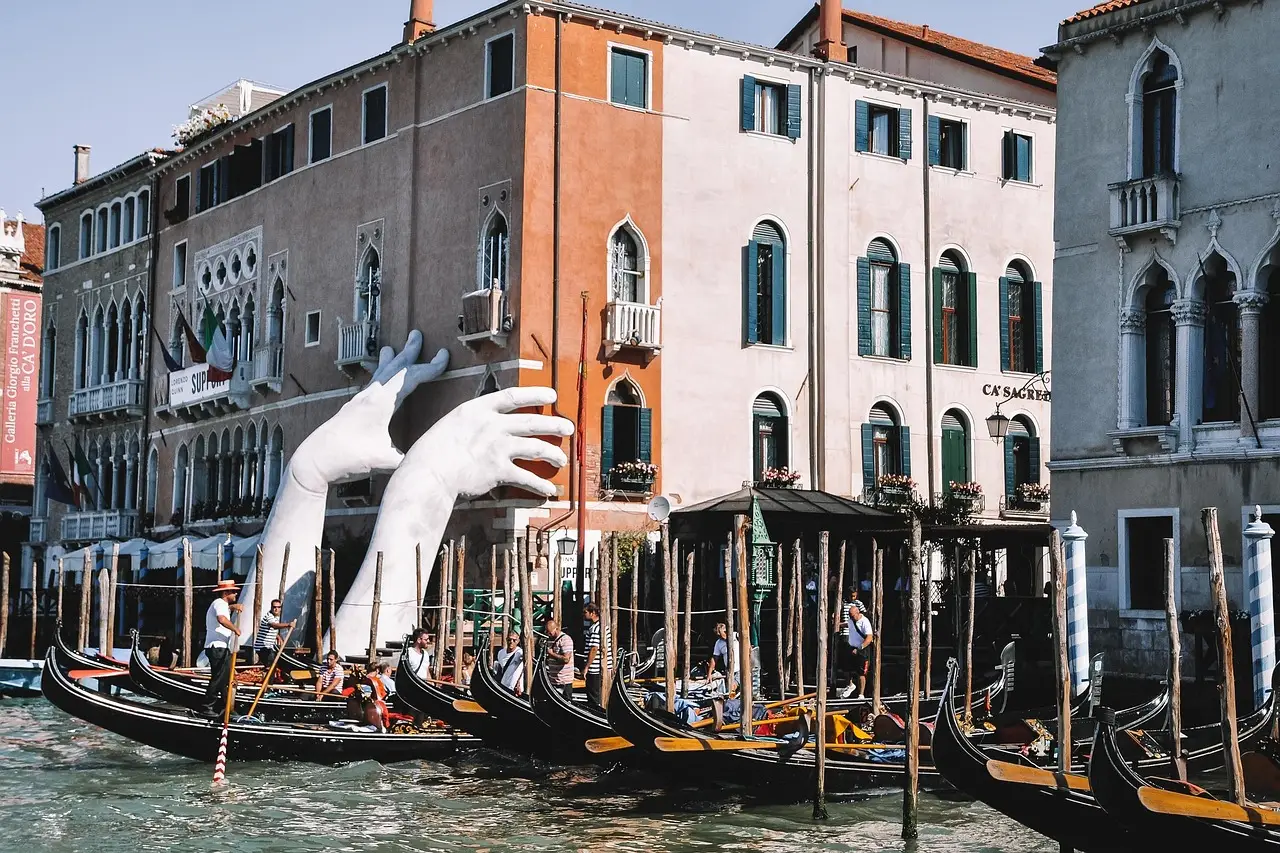
Unlike most European countries, Portugal has no permanent national pavilion building in Venice. Its exhibition will run at Fondaco Marcello, a 15th-century building on the Grand Canal. The same venue hosted the Portuguese exhibition at the 19th Venice Architecture Biennale in 2025.
The curators frame the African participants as "a source of learning, not a distant object." Their content unfolds across six themes: extreme climates, local materials, passive responses, memory and innovation, ways of doing, and toward building the future. Local authors will develop critical manifestos on these topics in different formats.
The curatorial strategy connects the former colonies' building knowledge to the foundations of the Venice Biennale itself, presenting architecture as an act of making that brings together earth, craftsmanship, memory and innovation.
How does it fit the 2027 Biennale theme?
Wang Shu and Lu Wenyu, curators of the 20th edition, set the theme "Do Architecture — For the Possibility of Coexistence Facing a Real Reality." Their brief calls for a return to the material act of doing architecture, critiquing the contemporary disconnection between the discipline and lived reality. The Portuguese curators see the invitation as a chance to answer that call while highlighting the preservation of cultural heritage.
The Portuguese project also travels. After the Biennale closes, the exhibition is expected to tour Portugal, Cabo Verde, Guinea-Bissau, Mozambique and São Tomé and Príncipe — bringing the show back to the countries it draws from.
What are other countries doing in 2027?
Several national pavilions are converging on material craft:
- The United States presents "Earth Craft," an exhibition on earth-based architecture in brick, rammed earth, adobe and concrete masonry.
- The Nordic exhibition, "Painted Matter," sits in Sverre Fehn's modern pavilion and explores traditional decorative painting in contemporary architecture.
- The Swiss pavilion takes water as its subject, starting from Switzerland's role as "Europe's water tower" as a territorial, ecological and political condition.
- The Icelandic pavilion examines bathing culture through architecture, public space and social interaction.
For national pavilions that can't build permanent buildings in Venice, sharing space has become the message itself — and Portugal's version arrives with a five-country tour already attached.
Source: ArchDaily
More from Elena Vasquez
Show full bio
Senior reporter covering money, funding and market shifts around construction industry, architecture, interior design at Built Current.
408 articles