Nickel Wins, Brass Chases: Designers Reveal Cabinet Hardware Trends
A KBB survey finds most designers specify one hardware material per project, nickel beats brass, and 50.8% pick decorative hardware mid-project. Minimalism still rules the pull.
- Section
- Kitchen & Bath
- Author
- By Amara Osei
- Filed
- Length
- 3 min read
Key takeaways
- Just over half of surveyed designers specify a single hardware material per residential project.
- Nickel is the top finish; brass is a close second.
- 50.8% of designers choose decorative hardware in the middle phase of a project.
- Almost 50% favor minimalist decorative hardware; about 30% go bolder.
- Innovations spotted at KBIS 2026 include slide-through drawers, Murphy doors and concealed lazy Susans.
By Amara Osei
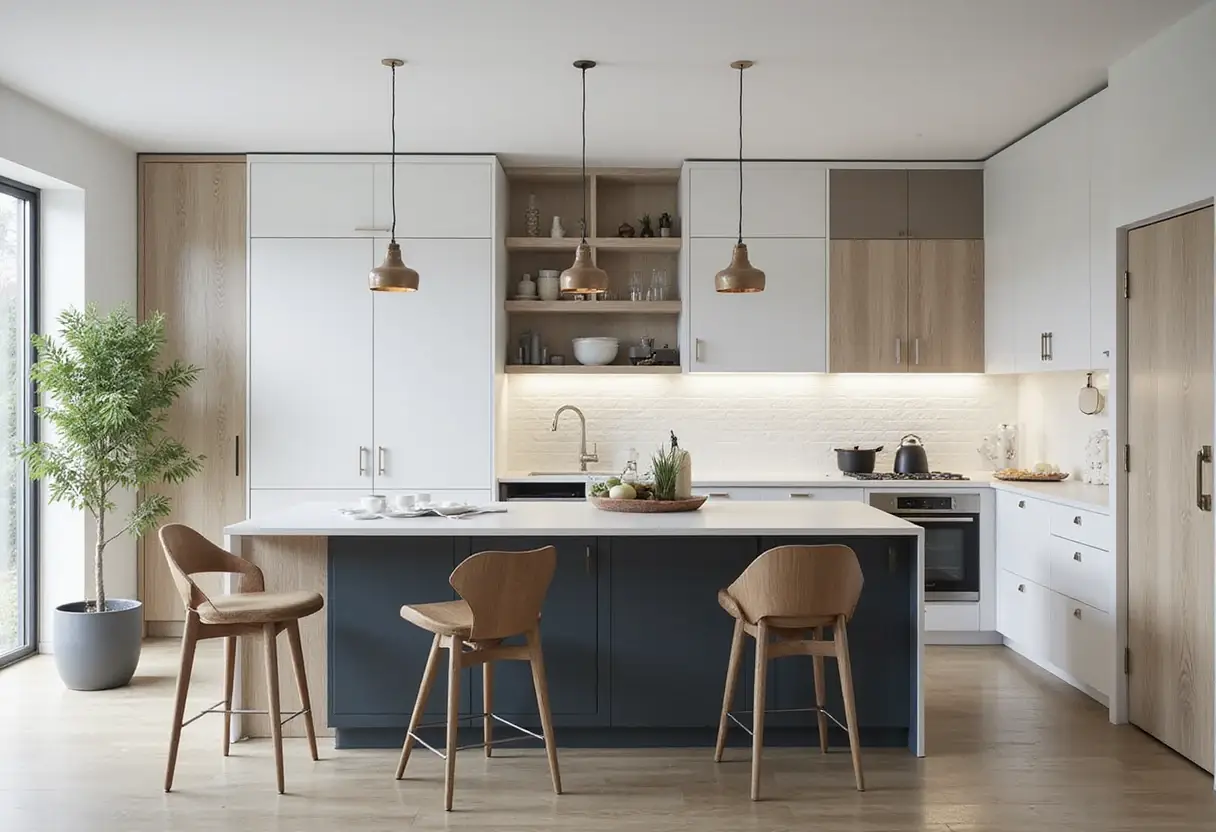
More than half of design professionals stick to a single hardware material per residential project, according to a new Kitchen & Bath Business survey on cabinetry hardware. Just under half mix. The split tells you something: hardware decisions are now choreography, not afterthought.
How do designers actually choose?
Nick Vanderhovel, CMKBD, owner of Detroit-based Dream Kitchens, keeps a tight leash on variety. "I tend to mix hardware only when there's a real reason for it: a standout island, a furniture-like hutch or a significant aesthetic shift within the same space," he said. "Otherwise, I prefer to keep the cabinet hardware consistent and introduce a mix of finishes through the other fixtures and materials in the room."
His verdict on mixing for its own sake is blunt: "For me, mixing hardware should help tell the design story, not just add another finish for the sake of variety."
On boldness, the profession is modest. Almost 50% of respondents lean minimalist with decorative hardware; roughly 30% go bolder. Many mix both — powder rooms and closets being the sanctioned playgrounds. Rose Ott, owner of Rose Ott Design in Long Beach, N.Y., plays it mainstream in kitchens and saves out-of-the-box picks for butler's pantries and custom furniture.
Which finishes and materials are winning?
Nickel took first place, with brass a close second. The long tail: chrome, enamel/powder coat, iron, glass, wood, leather, stone, acrylic, ceramic, bronze, copper, stainless steel and matte black.
Vanderhovel assigns materials by workload. "Acrylic can be beautiful, but there are relatively few options I'm comfortable specifying on integrated refrigeration because of the amount of pulling force those handles can endure," he said. "I often specify leather in closets and offices where there's less concern about wear or damage over time."
Unconventional styles spotted over the last year include backplates, antique looks, catches and latches, shelf rails, fingerprint-resistant options, tab pulls on frameless cabinets and finger pulls.
What matters most — looks or function?
Aesthetics ranked first, function second, ergonomics third. Ott calls all three equal. Vanderhovel goes further: "Hardware isn't always just something you interact with, it can be an important part of the architecture of the cabinetry." He'll even place hardware in atypical spots to build symmetry.
Timing splits by type. Most pros specify functional hardware at a project's start; 50.8% pick decorative hardware in the middle. "There are so many details to work out when designing a kitchen and bath, so we like to lock down the design first – perhaps with a hint of what we see for the hardware," said Ott. "I would say we really decide on the hardware in the middle phase."
Vanderhovel decides on day one. Presenting a complete idea, he said, "helps reduce unnecessary revisions because clients aren't being asked to make individual decisions in isolation."
What's new in functional hardware?
Soft-close mechanisms and drawer slides top the list, followed by pocket doors, push-type mechanisms, shelf pins and supports, pull-down shelves and motorized options. Almost half of respondents have specified hardware that lets shelving units spin or rotate.
Innovation spotted at KBIS 2026 and other events includes nature-inspired looks, lost wax methods, quartz hardware, slide-through drawers, Murphy doors, tables in drawers, concealed lazy Susans and catch-latch hardware that holds doors open.
One respondent kept it simple: "I believe the best hardware innovation is the one that quietly makes life easier every day."
Brand loyalty is thin. Vanderhovel shops around for unique finishes from smaller and international makers. "Hardware is such an easy place to introduce something unexpected, and I'd rather find a piece that feels specific to the project than default to the same collection every time," he said. "There's a whole world of interesting hardware out there, you just have to be willing to go searching for it."
The survey suggests the industry agrees: the search, not the catalog, now drives the spec.
Source: Kitchen & Bath Business
More from Amara Osei
Show full bio
Market editor covering companies, deals and strategy in construction industry, architecture, interior design at Built Current.
144 articles