Nebbia Carves a 1,000-Year Basalt Portal for New Zealand's Paererewa
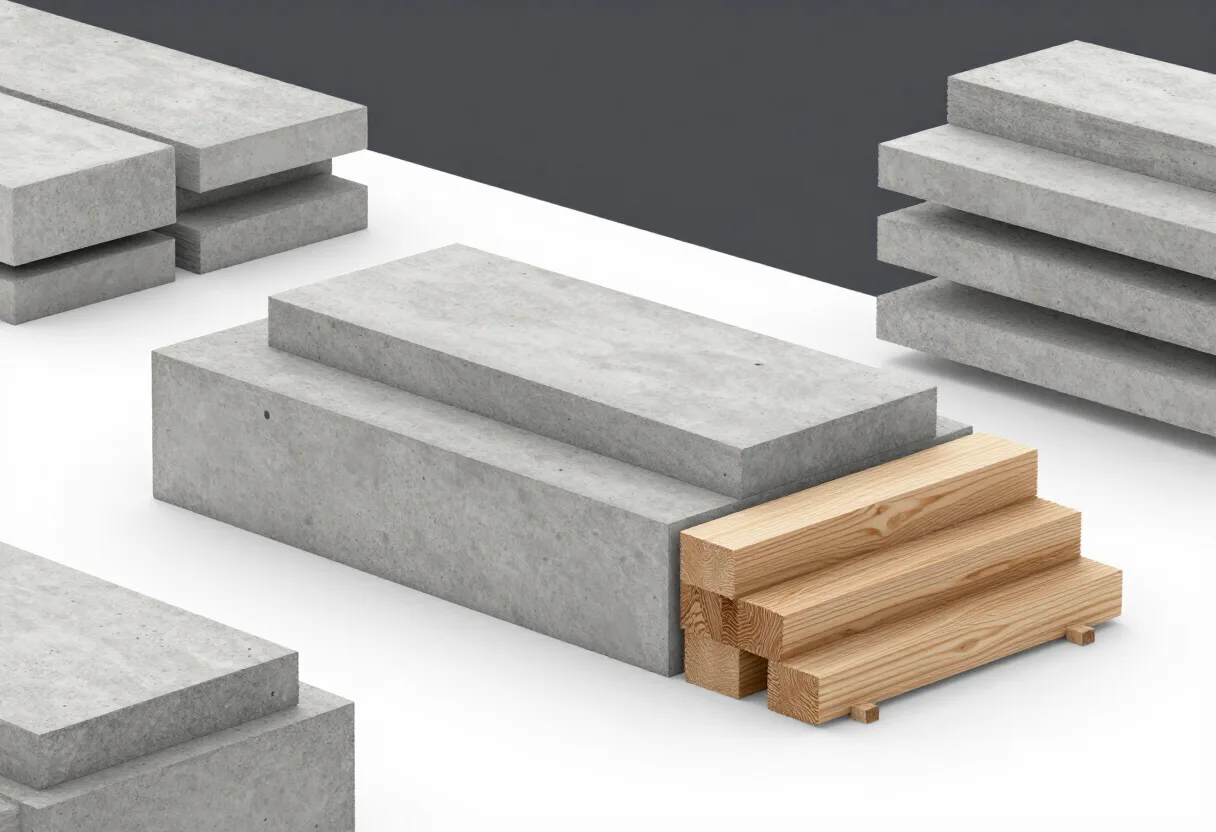
Nebbia's Interlude, a basalt bluestone portal above Lake Whakatipu, is the second of 1,000 millennium-scale works in New Zealand's Paererewā initiative — and it is designed to degrade.
- Section
- Landscape & Public Space
- Author
- By Marcus Bennett
- Filed
- Length
- 3 min read
Key takeaways
- Paererewā aims to create 1,000 works designed to last 1,000 years.
- Nebbia's Interlude is the second completed work, installed at Jardine Park, south of Aotearoa.
- The sculpture is made of locally sourced basalt bluestone from Timaru.
- Nebbia previously built a stacking-block installation at Coachella 2024 and a V&A London Design Festival pavilion.
- Still, led by Hideaki Fukutake, founded the Paererewā initiative.
A sculpture commissioned to last 1,000 years now stands on a cliff at Jardine Park in the south of Aotearoa, and its makers accept it may not survive intact. Interlude, by London studio Nebbia, is the second completed work in Paererewā, a New Zealand national initiative that aims to create 1,000 works built to endure a millennium.
Nebbia's founders, Madhav Kidao and Brando Posocco, are accustomed to thinking monumentally. Their portfolio includes a cathedral-like installation of stacking blocks at Coachella in 2024 and an aluminium pavilion floating over the fountain of the V&A's John Madejski Garden for London Design Festival. The Paererewā commission pushed them somewhere different: into deep time.
What does designing for a millennium actually require?
The initiative is the brainchild of Still, a company led by Japanese entrepreneur Hideaki Fukutake, which gathered a group of like-minded companies around a long-term plan to enhance local communities through culture and art. Each piece, combining sculpture and seating, is commissioned as a threshold between everyday routine and deeper reflection.
Kidao and Posocco began with the question of inhabitation itself. 'Our first thought was to comprehend what 1,000 years means, both anthropologically and ecologically,' they said. 'New Zealand was uninhabited by humans 1,000 years ago, with the first people arriving only around 800 years ago. Would it still be inhabited in the next 1,000 years? If not, who or what are we designing for?'
The answer took the form of a portal-like sculpture that can be climbed and sat on: 'a place for two strangers to serendipitously meet and share knowledge, wisdom or simply an emotional connection.' The site commands views across Lake Whakatipu and The Remarkables mountain range.
Why basalt bluestone instead of a living material?
The practical brief posed two constraints the designers call 'forces beyond our control': the millennium horizon and the region's seismic conditions. Rather than fix the object's form, they designed for change.
'We were never tied to the idea that it needed to exist in the same state for 1,000 years,' they said. 'It could grow, degrade or fragment.'
That openness led them first to research growing the piece. They discovered that no native plant species in New Zealand lives for 1,000 years. Stone solved the problem. Interlude is made of locally sourced basalt bluestone from Timaru, a material the designers say 'taps into a conception of time beyond the human-centred viewpoint.'
The choice extends a thread running through Nebbia's wider practice. 'Many of our projects explore the idea of impermanence: everything came from somewhere and will become something else, and our interaction with it is fleeting, be it one day or 1,000 years,' they said.
For practitioners, the project reframes longevity as a matter of material logic rather than formal permanence. With 998 works still to come under Paererewā, Interlude sets a precedent: durability here means accepting degradation as part of the design, not resisting it.
Original: google.com
More from Marcus Bennett
Show full bio
Correspondent covering money, funding and market shifts around construction industry, architecture, interior design at Built Current.
178 articles