Warehouse Conversion and Cow-Led Retrofit Anchor Festival of the Future Show
A two-day show at the Royal College of Art in Battersea gathers student work from five London schools, led by a disused warehouse turned into community workshops.
- Section
- Architecture
- Author
- By Elena Vasquez
- Filed
- Length
- 4 min read
Key takeaways
- Festival of the Future 2026 is a two-day event produced by Beyond the Box CIC at the Royal College of Art, Battersea.
- The school show features students from University of Westminster, London Metropolitan University, Ravensbourne University London, the Architectural Association and Central Saint Martins.
- Projects span RIBA Part 1, Part 2 and integrated MArch study.
- Themes include climate and regenerative design, reuse and material reinvention, care and community.
- The Festival also runs workshops, talks, portfolio clinics and panels with practices and civic organisations.
A disused warehouse converted into community workshop and studio spaces sits at the centre of a student exhibition now on show at Festival of the Future 2026, a two-day event produced by Beyond the Box CIC at the Royal College of Art in Battersea.
The school show gathers selected work from five London institutions: University of Westminster, London Metropolitan University, Ravensbourne University London, the Architectural Association School of Architecture and Central Saint Martins. Projects span RIBA Part 1, Part 2 and integrated MArch study.
"Selected by their schools, the projects tackle the questions defining architecture's future: climate and regenerative design, reuse and material reinvention, care and community, and who gets to shape the places we share," the Festival statement reads. Beyond the Box adds: "it takes a whole sector to open up a profession."
What are the standout projects?
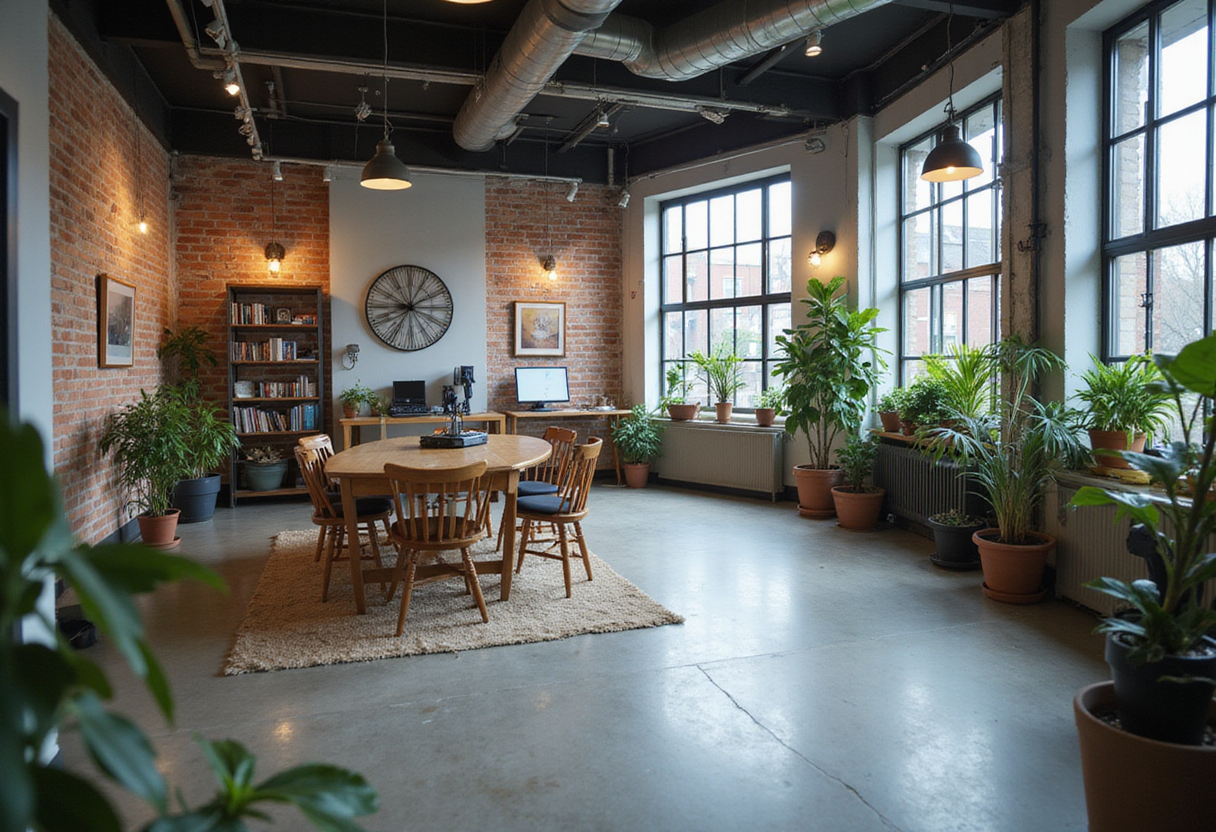
Callum Copping's Within The Frame (Ravensbourne University London) repurposes the disused warehouse, sited between a busy road and a river, into flexible workshop and studio space for the local community. The design sources materials from the original building and addresses embodied carbon, low energy use and ecological diversity.
Shuncheng Lin's Moo Moo Meadow: A Metabolic Village (Central Saint Martins) retrofits an existing dementia care centre, sports hall and nursery in Ladywell into a self-sustaining system organised around cows. The proposal uses waste from one space as an opportunity for another, and introduces animal-assisted therapy and learning for a sensitive demographic.
Ava Macgregor's The Pepper Exchange (University of Westminster, MArch RIBA Part 2, tutored by Arthur Mamou-Mani and Toby Burgess) captures waste heat from liquid-cooled servers to grow sweet peppers year-round in high-tech greenhouses, responding to declining food production in the Lea Valley and the rise of energy-intensive London data centres. The scheme adds housing, community gardens and a public restaurant.
How do students treat reuse and impermanence?
Alex Naylor's The Circular Yard (Ravensbourne) is a shared workshop building combining materials from the existing structure, elements sourced from buildings being deconstructed across London, and new components. It is "designed to evolve through ongoing cycles of use, dismantling and reuse, so that when this building reaches its end life, its materials can live on and be used elsewhere again."
Olivia Walling's Re:Make Garden reuses brick from its neglected, waste-filled site to build a community learning and making space. Unit 8 at London Metropolitan University explored "impermanence" through a mews house in South London and a reused mixed-use public building at the corner of Haggerston Park, asking: "If we have to build anew today, how do we do it?"
Amlyn Evans' Re-Commoning the People's Forest (Central Saint Martins) proposes a ceramics, construction and theatre workshop in Epping Forest, built around a central kiln with reused materials and 3D-printed clay expanding into new typologies. Seren Baldwin's Wastescape casts real food scraps, packaging fragments and found objects in plaster, turning a Somers Town waste centre into a civic third place between the British Library and the Francis Crick Institute.
What resistance and coexistence emerge in the show?
Félix Perier's Towards the New Station (AA, Unit 10) extends the structural grid of the last standing low-rise on Marsh Wall into a public plaza on the Isle of Dogs, framed as "symbolic and tectonic resistance" to corporate pressure. Aiden Lee's Next Valley (Unit 6) examines the Finnish town of Hamina and asks what becomes of data centres when "the age of AI and data storage ends". Eda Samgul's Subsidence – The Sunken Herd (Unit 17) proposes a double-helical descent into central Anatolia's sinkholes, with spaces for dwelling, learning and animal care sustaining pastoral life.
Miriam Iuga's Opening the Ground reimagines Set Social in Peckham around gardening, cooking and eating, where "the garden represents return, the kitchen invites exchange, and the shared table becomes the ultimate point of connection."
Alongside the exhibition, the Festival runs workshops, talks, portfolio clinics and panels with leading practices, universities and civic organisations — aimed, in Beyond the Box's words, at "widening the routes in" to a profession it argues must be opened by the whole sector.
Original: linkedin.com
More from Elena Vasquez
Show full bio
Senior reporter covering money, funding and market shifts around construction industry, architecture, interior design at Built Current.
126 articles