MoMA Awards $200,000 Ambasz Prize to Kashef Chowdhury's Friendship Centre
MoMA hands its first $200,000 Ambantz–MoMA Prize to Kashef Chowdhury/URBANA's Friendship Centre, an earthen training facility in Bangladesh's flood-prone Jamuna delta.
- Section
- Architecture
- Author
- By Grace Kim
- Filed
- Length
- 3 min read
Key takeaways
- MoMA awarded the first Ambasz–MoMA Annual Prize, worth $200,000, to Kashef Chowdhury/URBANA for the Friendship Centre in Gaibandha, Bangladesh.
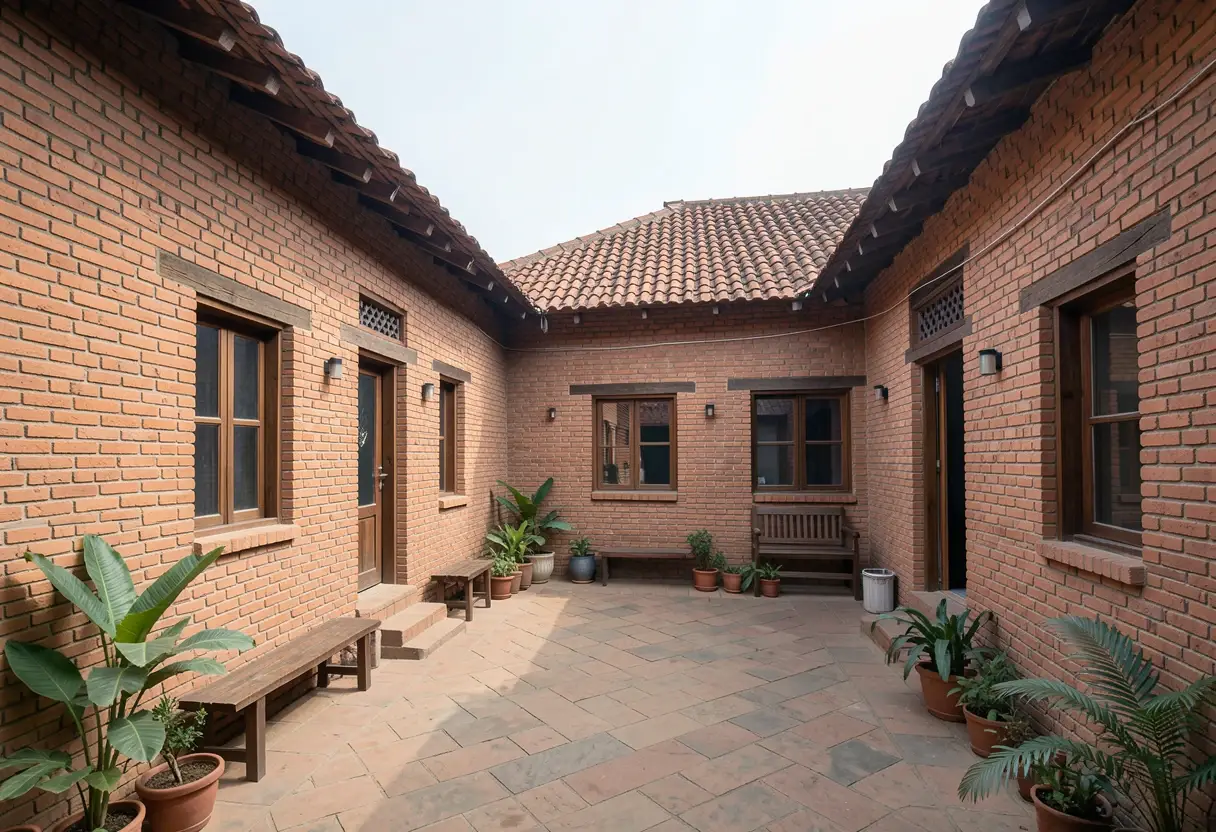
- The 2011 building was handcrafted mostly from local clay bricks and protected by a compacted earthen embankment against seasonal flooding.
- The jury chose the project from nearly 140 international entries nominated by 30 nominators across world regions.
- Half the award goes to Fundación Gran Chaco to plant trees in Argentina's Gran Chaco forest in the name of the Friendship NGO.
- The prize ceremony takes place at MoMA on December 12, 2026.
MoMA has awarded its first Ambasz–MoMA Annual Prize for Nature–Reconciled Architecture — a $200,000 award the museum describes as the largest for a single architecture project — to Kashef Chowdhury/URBANA for the Friendship Centre in Gaibandha, Bangladesh.
The prize money is split between the Dhaka-based architect and the Fundación Gran Chaco, a nonprofit in Formosa, Argentina. The organization will plant trees in the Gran Chaco forest in the name of the project's client, the Friendship NGO, contributing to reforestation. The award will be presented at a ceremony at MoMA on December 12, 2026.
What won the prize?
Completed in 2011, the Friendship Centre is a rural training facility and meeting space for communities in Bangladesh's flood-prone Jamuna River delta. The region faces seasonal flooding and earthquakes. The design answers with a compacted earthen embankment for flood protection and by building directly on the original, low-lying ground.
Workers handcrafted the building mostly from local clay bricks, following community building traditions. The facility spans two blocks containing:
- offices and classrooms
- a library
- meditation spaces
- dormitories
- dining facilities
Its layout and image echo the nearby third-century BCE ancient city of Mahasthangarh, while adding contemporary elements: green roofs, open-air courtyards and interconnected rainwater harvesting pools for temperature control and natural ventilation.
Evangelos Kotsioris, director of the Emilio Ambasz Institute and a member of the jury, said the project "demonstrates how a remarkable economy of means can yield a richness of spatial experience, offering a compelling vision of how architecture might reconcile with nature." He added that the inaugural prize recognizes architecture that merges environmental adaptation, historical continuity and sensitivity to the communities it serves.
What does the architect say?
Chowdhury framed the award in terms of deep time rather than the building's working life. "The Friendship Centre has been in service to an underserved community for 14 years. Yet, it is not a building of 14 years of age, but rather 2,300 years of age, as it draws its inspiration for flood protection from the nearby third-century BC settlement of Mahasthan," he said.
"We are delighted that its coexistence with the surrounding agricultural, rural landscape, without really showing its mass forms to adjoining villages, has been recognized in this important judgment. This pronouncement surely will, in no small terms, encourage an alternative reading of landscape and place making, not only in such locales as this remote part of one of the largest deltas in the world, but in every place where human intervention is destined to exist in the fragile ecosystem that we ourselves have caused to create."
How was the winner chosen?
The Friendship Centre emerged from a pool of nearly 140 international projects, identified through research by the Ambasz Institute and proposals from 30 nominators representing different world regions. Martino Stierli, MoMA's Philip Johnson Chief Curator of Architecture and Design, said the project was recognized as an example that leads architectural practices and design thinking into progressive new directions.
The jury paired three representatives of MoMA's Department of Architecture and Design — Stierli, Kotsioris and assistant curator Paula Vilaplana de Miguel — with two external members: Shelley McNamara of Grafton Architects and Wang Shu of Amateur Architecture Studio. Projects were evaluated on rigor, creative engagement with the natural environment and alignment with the mission of the Emilio Ambasz Institute.
The prize takes its name from Argentine-American architect and industrial designer Emilio Ambasz, MoMA's curator of design from 1968 to 1976 and a member of the museum's International Council since 1978. In 2020, he donated funds to establish the Emilio Ambasz Institute for the Joint Study of the Built and the Natural Environment, which supports research and public programs on architecture and ecology. Eligible projects for the annual prize must have been completed anywhere in the world within the past 30 years and be considered exemplary in repairing architecture's relationship with nature.
The debut prize sets a precedent: a single building can now carry architecture's largest award — and fund reforestation on another continent at the same time.
Original: gran-chaco.org
More from Grace Kim
Show full bio
Staff writer covering money, funding and market shifts around construction industry, architecture, interior design at Built Current.
345 articles