Key takeaways
- Carl Hansen & Søn released the Children's Wishbone Chair in 2024, keeping the 100-step production process of the 1949 original.
- "Mini Furniture: Chairs for Children" at Hamburg's Museum für Kunst und Gewerbe shows more than 130 children's chairs through November 1.
- Ligne Roset's Mini Togo dates to 2007; Paolo Lenti launched a Kids Collection at Milan Design Week 2025.
- Lora Appleton of Kinder Modern warns scaled-down icons are often "just cute, but not functional."
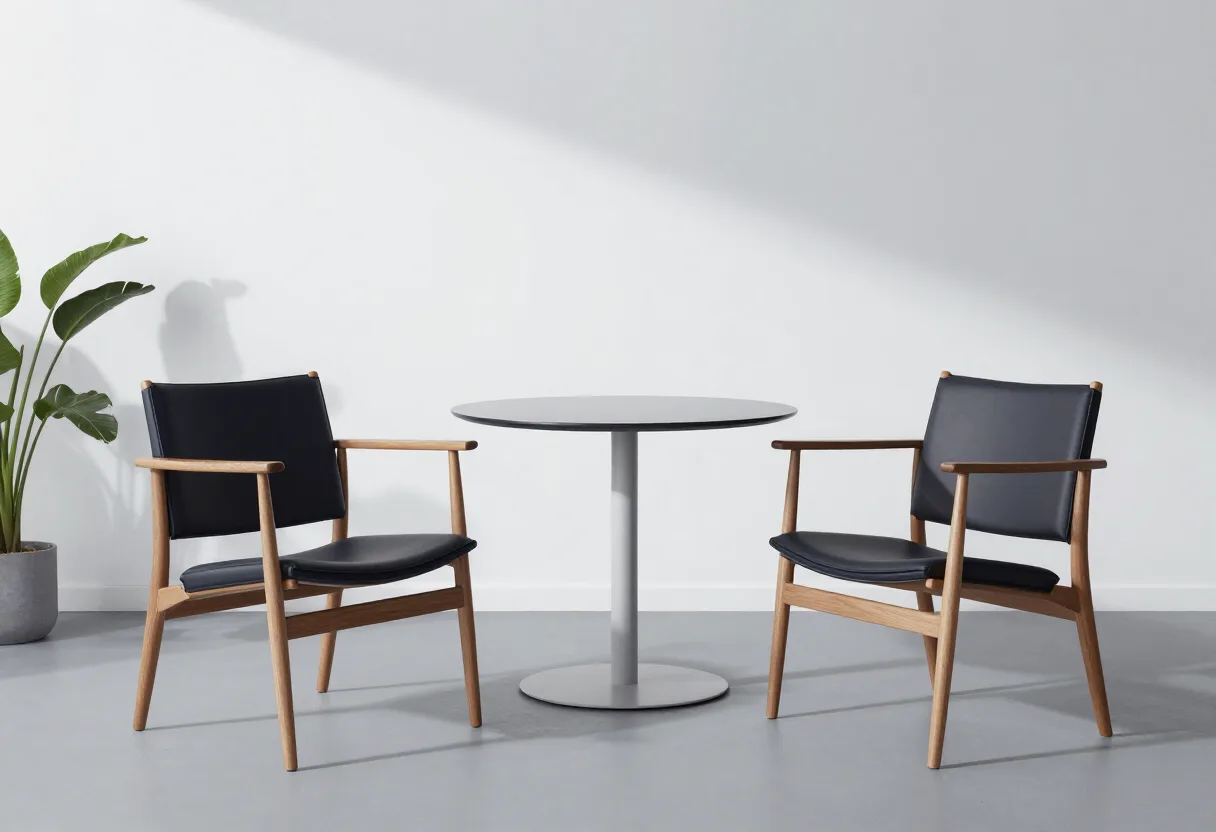
Carl Hansen & Søn released the Children's Wishbone Chair in 2024, preserving the curved back, Y-shaped support and meticulous 100-step production process of Hans Wegner's 1949 original — for customers too young to know it is an icon.
The mini Wishbone belongs to a growing catalogue of adult classics remade at child scale. Ligne Roset introduced the Mini Togo in 2007, shrinking Michel Ducaroy's foam lounge chair for five-to-12-year-olds. A child-size Barcelona chair and Faye Toogood's Roly-Poly followed. Paola Lenti premiered a full Kids Collection of downsized sofas, poufs, chairs and tables at Milan Design Week in 2025.
What does the museum exhibition show?
This year, Hamburg's Museum für Kunst und Gewerbe placed these launches inside a much longer history. "Mini Furniture: Chairs for Children," on view through the first of November, gathers more than 130 children's chairs from two centuries: high chairs, miniatures of adult classics, and furniture built to support children's motor, social and creative development.
A chair is one of the first objects that asks a child to arrange a restless body to fit adult architecture. Across two centuries, competing adult agendas have used children's chairs to make toddlers sit properly, act independently, or use their imaginations.
The agendas diverge sharply. By the late 1800s, Thonet had added child-size cane seating and high chairs to its catalogue. A 1931 English model in the MK&G exhibition bears the name Correction Chair; homes and schools used it to straighten posture and enforce discipline. Erich Dieckmann's 1925 children's ladder chair, also at MK&G, doubles as steps for reaching higher shelves. Montessori philosophy, by contrast, promotes the "prepared environment" — low, lightweight furniture children can move and use without asking an adult for help.
Designers also accepted that a seated child rarely stays seated. Charles and Ray Eames's molded-plywood Elephant, designed in 1945, could be sat on, ridden or treated as an animal.
How do you scale a modular system down?
When industrial designer Henry Julier developed a children's chair for USM, the Swiss maker known for steel tubes and ball joints, he could not simply shrink an existing design. He had to find child-friendly proportions using the same parts. "At that scale, sitting, climbing, leaning and playing can become pretty interchangeable," he says. The finished chair behaves like a stool, and its "back" doubles as a handle for adults.
For many buyers, miniature chairs are design objects as much as children's furniture. Lora Appleton, founder of children's design gallery Kinder Modern, has watched collectible children's furniture gain traction as design-conscious parents, influencers, actors and other high-profile families embrace living stylishly with children. In designer Abigail Turin's Carpinteria kitchen, children's Panton chairs stand alongside Eero Saarinen's Tulip chairs — child-size furniture absorbed into the family's design vocabulary rather than confined to a separate children's world.
"Naturally, the purchasing decision is made by an adult, and many parents appreciate children's furniture that integrates harmoniously into the overall aesthetic of the home," says Knud Erik Hansen, CEO and third-generation owner of Carl Hansen & Søn. Children's furniture has "often been viewed as something transitional," he says, but the Children's Wishbone is designed to become an heirloom carrying memories between generations.
Cute or functional — what actually works?
Appleton cautions that scaled-down icons are not always practical. An adult design made smaller can cost nearly as much as the original to produce, be outgrown quickly, or lack the stability and proportions a child needs to use it independently. "Often, it's just cute, but not functional," she says. A miniature chair can succeed as an image while failing as a chair, eventually becoming a catchall for clothes and bedroom debris.
She evaluates children's furniture on safety, size, function and play-ability: Can the child move it without help? Can small fingers get caught? Will it stay useful as dexterity and interests change? She has watched children turn a miniature Panton chair on its side to support a fort, hide behind its curves and wedge stuffed animals into its crevices. When she tested prototypes with her son, he crawled beneath them and ignored the expected use — detours that often inspired new design ideas.
Every tiny chair begins as an adult proposal: teach posture, invite play, cultivate craft, become an heirloom. The child counters with a proposal of their own. The best tiny chairs, Appleton's experience suggests, leave room for the fort.
Original: cna.st
More from Marcus Bennett
Show full bio
Correspondent covering money, funding and market shifts around construction industry, architecture, interior design at Built Current.
171 articles