MasTec Deploys Gritt's Robotic Attachments on Utility-Scale Solar Jobsites
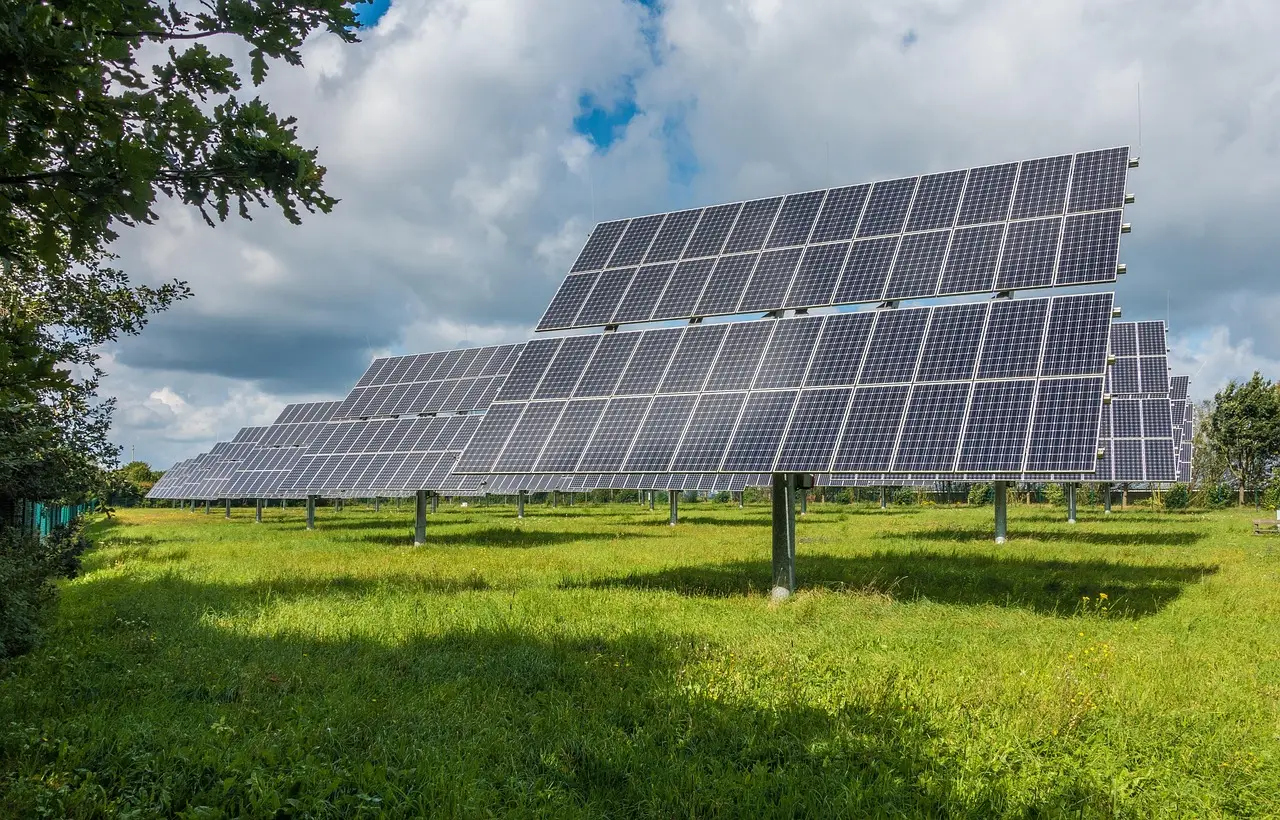
MasTec will deploy Gritt's AI-powered robotic attachments across its utility-scale solar portfolio, after field tests installing megawatts of panels on active jobsites.
- Section
- Construction Tech
- Author
- By Marcus Bennett
- Filed
- Length
- 2 min read
Key takeaways
- MasTec will deploy Gritt's AI robotic attachments across its multistate utility-scale solar portfolio.
- Gritt launched in July with $32.4 million in combined Seed and Series A funding.
- The deal follows field tests installing megawatts of solar panels on active MasTec jobsites.
- Physical AI startups raised over $1.2 billion in roughly 18 months: FieldAI $405M, Gravis $200M, Bedrock $600M.
- Gritt attachments retrofit skid steers and forklifts and place objects with millimeter precision.
MasTec, one of the largest energy construction contractors in the United States, will deploy Gritt's AI-powered robotic attachments across its renewable energy projects, the startup announced.
The agreement puts aftermarket robotic systems on MasTec's active jobsites, starting with the firm's growing multistate utility-scale solar portfolio. The two companies intend to expand the collaboration through MasTec's pipeline of jobs.
The partnership follows field tests conducted during the installation of megawatts of solar panels on MasTec's live projects, per the announcement.
What does the technology do?
Gritt builds robotic attachments that retrofit existing construction equipment. Its AI systems learn physical tasks — picking and placing, assembly, material transport — while jobsite professionals guide the process, according to the announcement.
The attachments connect to machines contractors already own, including:
- Skid steers
- Forklifts
Gritt claims its products place objects with millimeter precision, according to the firm's funding announcement.
What changed for field crews?
Rob Turner, MasTec Renewables' vice president of construction, framed the deal as support for craft expertise rather than a replacement for it.
"We've evaluated Gritt systems on active construction sites, and we see an opportunity to pair our teams' expertise with technology that supports them in the field," Turner said in the news release.
For practitioners, the model matters as much as the machines. Retrofit attachments sidestep fleet replacement cycles. Contractors keep their skid steers and forklifts, add autonomy where the work is repetitive or precision-dependent, and keep crews in the loop as guides.
Who is Gritt?
South San Francisco, California-based Gritt launched in July with a combined $32.4 million in funding from Seed and Series A rounds, according to the firm.
It is not the only physical AI firm gaining traction in construction. The sector has drawn outsized investor capital in under two years:
- FieldAI raised $405 million across two consecutive funding rounds last year.
- Gravis Robotics raised $200 million in a Series A in August.
- Bedrock Robotics pulled $600 million in a funding round near the end of October.
- Bedrock also deployed fully autonomous excavators on Sundt Construction and Zachry Construction jobsites in August.
That totals more than $1.2 billion across four startups since last year.
Why a contractor of MasTec's scale matters
A deployment agreement from a national energy construction giant gives a four-month-old startup something early-stage robotics firms rarely secure: volume. Field tests covered megawatts of installed solar. The initial rollout covers a multistate portfolio. The stated intent is expansion through the pipeline.
For equipment managers and renewables contractors, the signal is direct. Physical AI has moved from demonstrations to contract-backed deployments on active utility-scale sites, and the funding behind it — $600 million for Bedrock Robotics alone in October — suggests more attachments, and more autonomous machines, will reach jobsites through 2025 and beyond.
Source: Construction Dive
More from Marcus Bennett
Show full bio
Correspondent covering money, funding and market shifts around construction industry, architecture, interior design at Built Current.
374 articles