Key takeaways
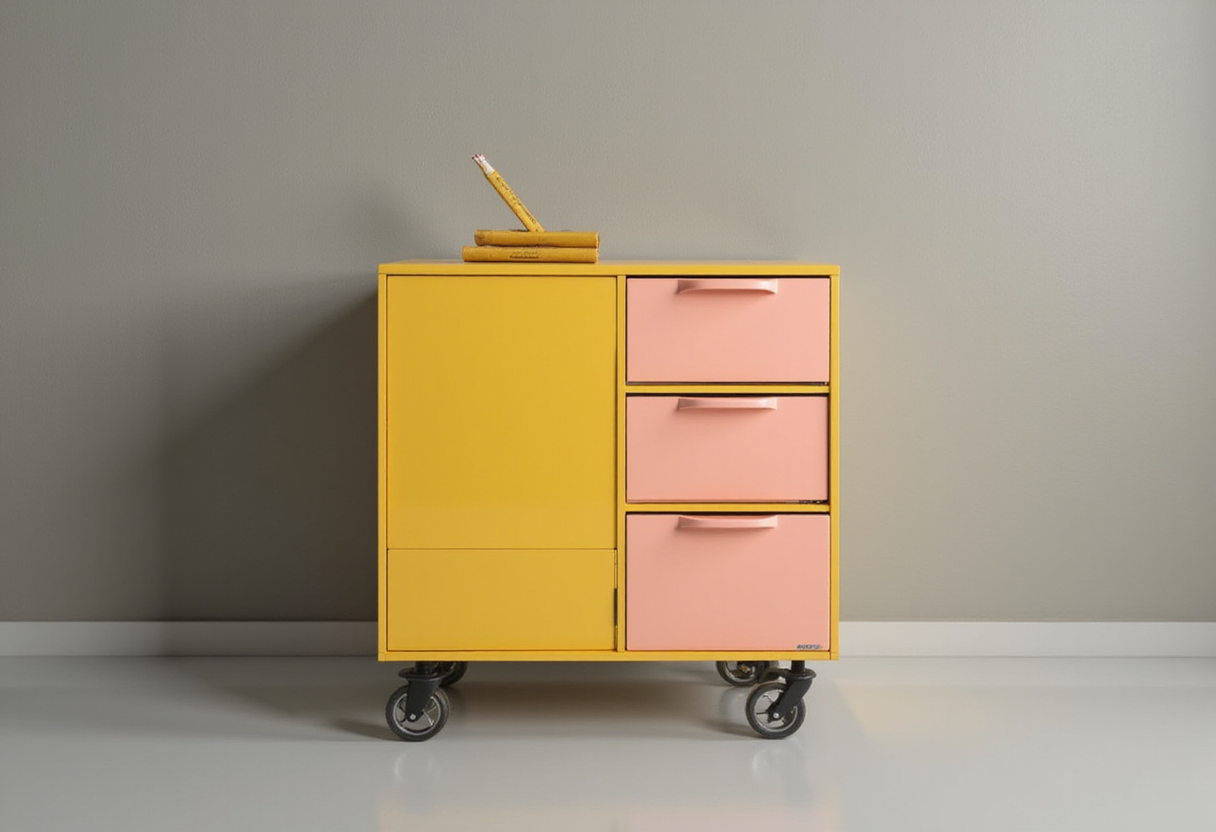
- Handy is a mobile furniture design by Taiwanese industrial designer Hsinhung Chou.
- The design targets homes where the same few square feet must serve multiple daily functions.
- Handy requires no folding mechanisms, toolkits, or digital connectivity.
- Open questions remain about its stability in use and handling of clutter and tight corners.
Taiwanese industrial designer Hsinhung Chou has designed Handy, a mobile furniture piece that moves with its user through the day instead of fixing a single spot in a room. The design targets a specific mismatch: the water glass, book, charger, headphones and laptop that pile up around a couch because the furniture is in the wrong place at the moment it is needed.
Handy's core proposition is relocation rather than accumulation. A user can keep it beside a chair in the morning, shift it to a workspace in the afternoon, and clear it away before dinner. None of those moments demands a plan, a toolkit, or another purchase.
What problem does mobility actually solve?
Chou's approach inverts the usual sequence. Mobility is typically treated as an add-on, decided after a designer has already defined what a piece of furniture is. Handy puts movement closer to the center of the idea. Its stated appeal is not transforming a home but removing one small friction point from an ordinary day.
The argument extends beyond small apartments. A spacious home can be just as rigid as a small one if every corner has a single assigned purpose. People change activities faster than they change rooms: they work where the light is better, take a call somewhere quieter, pull a chair closer to a conversation. Furniture that follows those habits, rather than a composed picture, tracks actual use.
No mechanisms, no software, no spectacle
Handy stands apart from the flexibility market's habit of selling folding parts, complicated mechanisms, or software-sounding product names. Its designer's case rests on how naturally it slips between settings rather than how clever it looks in a product photo.
The same restraint applies to technology. Handy does not track habits or sync with a phone. A physical object can make a home easier to use without demanding attention in return.
What still needs testing?
Movement alone does not make furniture good. A mobile piece must feel steady in use, move easily when idle, and look pleasant enough to leave in view. Those details decide whether flexibility becomes a daily convenience or a feature forgotten after a week. Questions remain about how Handy handles clutter and tight corners before it can be called an answer to every small-space problem.
Handy will not replace tables, desks, or storage. What it offers is a question to ask before adding another object to a room: could the thing I need move with me instead? For homes that change pace throughout the day, Chou suggests, that could be its most valuable feature.
Original: instagram.com
More from Elena Vasquez
Show full bio
Senior reporter covering money, funding and market shifts around construction industry, architecture, interior design at Built Current.
126 articles