Grimshaw completes 3,300-square-metre rammed-earth visitor centre in Australia
Grimshaw and Aspect Studios complete a 3,300-square-metre rammed-earth visitor centre for the Twelve Apostles in Victoria, developed with the Eastern Maar Aboriginal Corporation.
- Section
- Architecture
- Author
- By Marcus Bennett
- Filed
- Length
- 3 min read
Key takeaways
- Grimshaw and Aspect Studios completed a 3,300-square-metre visitor centre at the Twelve Apostles in Port Campbell National Park, Victoria.
- The centre's rammed-earth walls are intended to resemble a "landform rather than an autonomous object".
- It comprises two volumes, the Coastal Building and the Hinterland Building, plus a rooftop ocean lookout.
- The project was co-designed with Eastern Maar Aboriginal Corporation on Keerray Woorroong Country.
- Kane Constructions was the builder; the material palette includes rammed earth and plywood.
Grimshaw and Aspect Studios have completed a 3,300-square-metre visitor experience centre for the Twelve Apostles, one of Australia's most-visited natural landmarks, in Port Campbell National Park, Victoria.
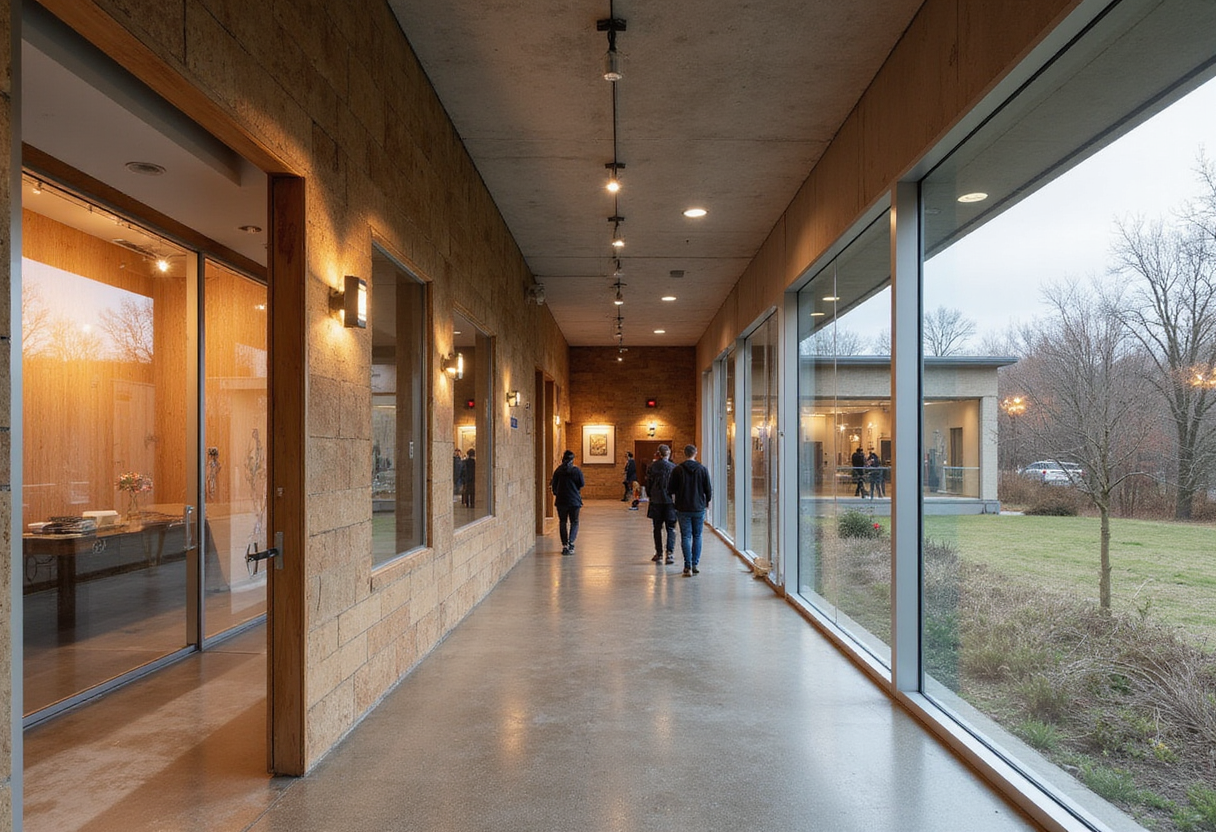
The building sits at the top of the site, with rammed-earth walls intended to resemble a "landform rather than an autonomous object", according to Grimshaw.
"This sequence is central to a broader ambition for the precinct: to move beyond simply processing large numbers of visitors and create a slower and more connected experience of Country," Grimshaw explained.
What does the centre contain?
The complex comprises two interconnected volumes: the Coastal Building and the Hinterland Building. Each extends outwards in a hugging gesture, facing the coast and the hinterland respectively.
- The Hinterland Building houses a cafe and retail facilities.
- The Coastal Building serves as the main public education and viewing area, crowned with a rooftop ocean lookout.
- Landscaped paths gently ascend to the lookout, with rest areas at various elevations.
Grimshaw used a natural material palette of rammed earth and plywood to enhance the building's organic look, adding warmth and tactility throughout.
How were Traditional Owners involved?
The centre was developed in collaboration with the non-profit Eastern Maar Aboriginal Corporation. The organisation helped determine the building's scale and position to respect both its site within Keerray Woorroong Country and its Traditional Owners, the Eastern Maar peoples.
The team also created the Welcome Garden, an outdoor events space and welcome area celebrating Eastern Maar cultural heritage, and planted coastal scrub, grassland and woodland around the site.
"The Twelve Apostles is a truly unique landscape in Australia and arguably anywhere in the world, where the power of the natural environment, the experience of Country and the enduring culture of Eastern Maar come together," said Grimshaw managing partner Andrew Perez.
"More than simply providing a new destination from which to experience the Twelve Apostles, the project invites visitors to pause, linger and explore, creating a meaningful connection to this extraordinary landscape and the culture and history that have shaped it," Perez added.
How does the precinct handle visitors?
A landscaped car park and new access roads separate buses from private vehicles. Pedestrian routes draw visitors from the parking areas into the Welcome Garden and the visitor experience centre, before dispersal to the Twelve Apostles and surrounding coastal attractions.
"The Twelve Apostles Visitor Precinct presented an opportunity to create a more considered relationship between visitors, Country and this extraordinary coastal landscape," concluded Aspect Studios director Matthew Mackay.
The project team included design lead Harriet Oswald, lead designer Eduard Ross and partner in charge Andrew Perez at Grimshaw, with Matthew Mackay and Nirvana Kadric as lead designers at Aspect Studios. Eastern Maar Aboriginal Land Corporation acted as co-design partner and heritage consultant, and Kane Constructions served as builder.
The completed centre signals how Australia's high-volume natural landmarks are shifting from throughput infrastructure toward architecture that stages cultural narrative and landscape. Grimshaw's recent work follows the same line: the firm recently unveiled a trio of Auckland stations informed by Māori narratives and released plans for a reimagined entry plaza for Allegiant Stadium in Las Vegas.
Original: aspect-studios.com
More from Marcus Bennett
Show full bio
Correspondent covering money, funding and market shifts around construction industry, architecture, interior design at Built Current.
116 articles