GOLEM Dyes Timber Kiosks with Paprika, Dill and Black Tea in Bukhara
GOLEM's Ariel André built Bukhara Biennale kiosks coloured with real spices, designing first for blind visitors, cats and bees — then for everyone else.
- Section
- Architecture
- Author
- By Marcus Bennett
- Filed
- Length
- 3 min read
Key takeaways
- GOLEM's Broken Hearts Bazaar kiosks at the inaugural Bukhara Biennial use paprika, dill, black tea and clover blossoms as colour finishes
- A blind visitor returned with fifteen companions to identify the timber cones by scent
- GOLEM delivered a 24-metre-long sofa for the Diriyah Biennale Foundation's Public Program Building in Riyadh
- The Amoreba conversation pit is installed in a curator's apartment in Brussels
- Founder Ariel André previously led design teams at OMA in Rotterdam
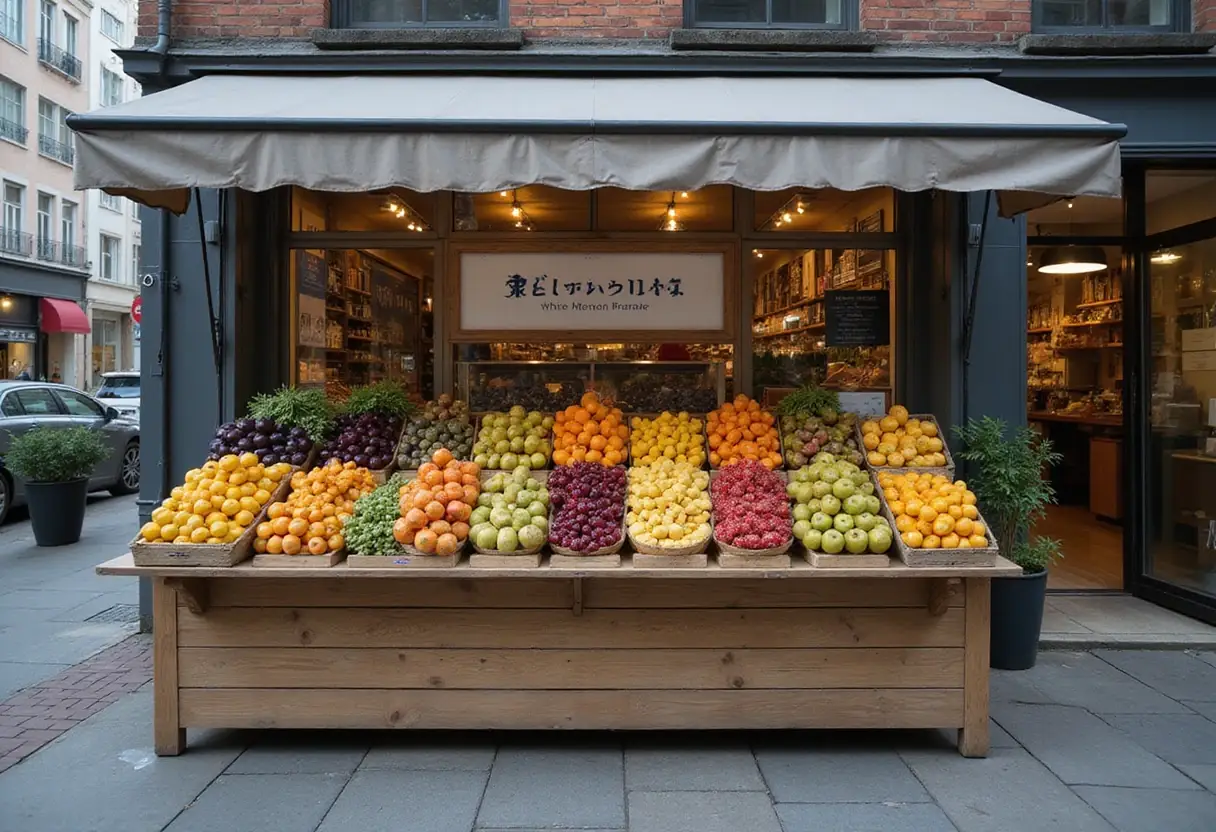
Conical timber kiosks finished with paprika, dill, black tea and clover blossoms formed the entrance to the inaugural Bukhara Biennial, designed by GOLEM founder Ariel André to be smelled before they are seen.
The Paris-based architect frames the project, Broken Hearts Bazaar, as the built proof of a working method: shift perspective before sketching anything. Commissioned by Gayane Umerova and curated by Diana Campbell, the installation reimagined the Biennial's arrival as a food market of kiosks distributed across Bukhara's historic centre — a UNESCO World Heritage Site — pulling the experience away from what André calls the "trade-show atmosphere" of traditional biennials.
André's starting point was unusual. He designed for those who do not see architecture: blind people, plus beings such as cats and wasps, whose encounter with a building carries no distinction between nature and culture. Smell led the design. The answer came from Uzbekistan's Silk Road heritage — the spice mounds of its markets — and the cones' coloured finishes use actual spices: paprika for red, dill for green, black tea for dark tones, clover blossoms for pink.
What did the shift in perspective produce?
The results were concrete rather than theoretical. A blind passerby returned with fifteen companions to identify the cones by scent. A local guide folded folk knowledge of medicinal herbs into her tours. Bees rested on the clover blossoms. Cats waited for closing time and licked the paprika walls at night.
"Starting from the standpoint of those usually overlooked opens up new forms and spaces, enriching the experience of life for everyone," André writes.
The argument behind the kiosks is broader. In a guest essay, André describes the built world as a nightmare that dictates how we live — apartments that constrain souls, sofas that fix bodies in front of televisions, airports that process travellers as commodities. His counter-proposal: architecture guided by pleasure, adapted to its inhabitants rather than the reverse.
How far does the method stretch?
Two further projects test the premise. Amoreba, an organic surface spreading through rigid interiors, began with a psychedelic fantasy of lounging among the bumps of a forest mushroom colony, designed from the perspective of a tiny creature crossing the terrain. Installed as a conversation pit in a curator's apartment in Brussels, it follows smooth curves, negotiates sharp angles and adapts to complex geometries — spreading, André writes, much as lichen spreads across stones and tree trunks.
For the Diriyah Biennale Foundation in Riyadh, commissioned by Aya Albakree and Sybel Vazquez, GOLEM documented body positions across Saudi Arabia's diverse communities and produced a 24-metre-long sofa inside the Public Program Building. It functions as both furniture and public infrastructure, letting different cultures, generations and bodily habits settle into their own postures.
Lamputée takes the logic to the object scale: each lamp is unique, moulded from an amputated limb. Turned upside down and abstracted from context, André argues, a form that provokes fear or discomfort becomes a collectible object and a source of beauty.
"Our responsibility as architects is to draw on the needs that bodies, in all their plurality, express in space," André writes. "It falls to us to dream into existence the environments in which we can all flourish, nest, forage or slither."
André founded GOLEM, an architecture, design and research studio in Paris, after leading design teams at OMA in Rotterdam on retail, museum, office and urban projects, with collaborations in Paris, Tokyo, Los Angeles, Amsterdam, Rotterdam and for the government in Haiti. The studio's work has appeared at the Diriyah Biennale, the Islamic Arts Biennale in Jeddah and the Bukhara Biennial — a track record suggesting multispecies framing can carry from installation pavilions into institutional commissions.
Original: google.com
More from Marcus Bennett
Show full bio
Correspondent covering money, funding and market shifts around construction industry, architecture, interior design at Built Current.
185 articles