GASAP's Cliff House Hugs a Wind-Blown Cretan Ridge Above the Libyan Sea
Cliff House by GASAP sits below road level on an exposed rocky outcrop in southern Crete, using compressed thresholds and stone walls to manage wind while framing the Libyan Sea.
- Section
- Architecture
- Author
- By Elena Vasquez
- Filed
- Length
- 2 min read
Key takeaways
- Cliff House by GASAP completes in 2023 on a rocky outcrop in southern Rethymno, Crete
- The residence measures 250 square metres with lead architects Christos Gkotsis and Elena Serafimidou
- Entrance sits below road level, descending through a compressed threshold into a double-height living space
- The plan separates a double-height communal zone from a single-story private wing with two en-suite bedrooms and a guest suite
- Materials include stone walls, matte-finished wood shutters, oak interiors and cement-based flooring extending into the infinity pool finish
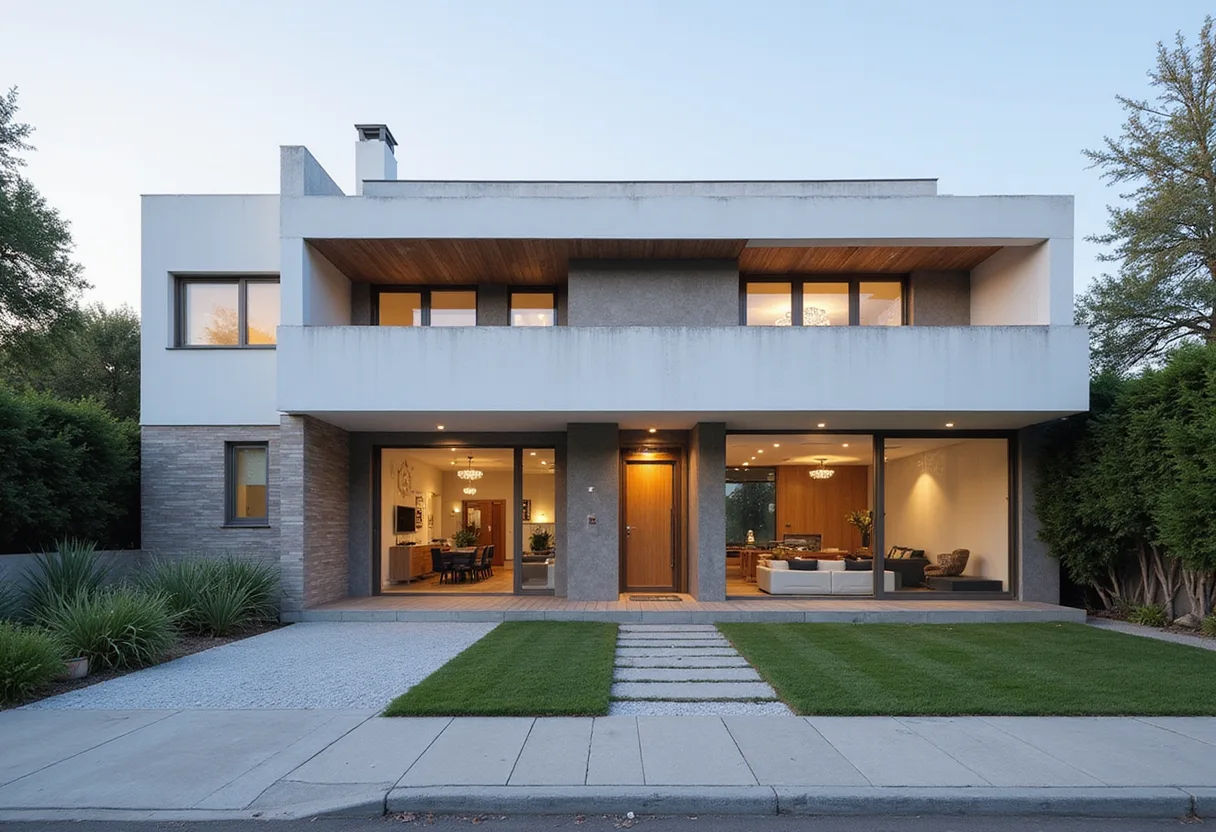
Cliff House, a 250-square-metre residence completed in 2023 on an exposed rocky outcrop in southern Rethymno, Crete, treats relentless wind as a design tool rather than a problem to engineer away. Athens-based practice GASAP, led by lead architects Christos Gkotsis and Elena Serafimidou, organized the entire house around a simple opposition: shelter and exposure.
How does the house handle the wind?
The site offers uninterrupted 360-degree views of the surrounding mountains and the Libyan Sea, but its elevation leaves the building fully exposed to strong winds. GASAP's answer is sequence. The entrance sits below road level, giving visitors a protected transition out of the windswept surroundings. They descend a staircase, pass through a deliberately compressed threshold, and then enter a double-height living space where floor-to-ceiling glazing suddenly reveals the coast.
That shift from tight enclosure to full openness, the architects say, becomes "a defining architectural experience." The house keeps repeating the pattern — protected space, then framed view — rather than offering one static panorama.
What's inside the two zones?
The plan splits into two interconnected functional zones:
- Communal zone: a double-height volume holding the living room, dining area and kitchen, extending outdoors to a lounge, barbecue area and infinity pool.
- Private zone: a single-story wing with two bedrooms, each with an en-suite bathroom, plus an independent guest suite reached through the poolside circulation.
The guest suite's separation along the same axis lets the house offer varying degrees of privacy without breaking its consistent relationship to the landscape.
Which materials tie it to the terrain?
Stone walls establish continuity with the rocky outcrop itself. Natural matte-finished wood shutters and cladding warm up the exterior. Inside, oak surfaces meet stone walls and cement-based flooring, and the same cement-based finish wraps the pool — a restrained palette that runs from living room to water's edge without a material break.
The landscape design works the same way. GASAP added feather grass (Stipa) to the existing vegetation so that the constant wind becomes visible: the grass moves, and with it the changing light reads across the site all day. Locally occurring green stone, mixed with fragments of the same stone used in the house, forms outdoor surfaces that blend into the surrounding ground.
The infinity pool closes the spatial sequence that began at the entrance. Aligned with the primary view toward the Libyan Sea, its vanishing edge makes the water surface and the distant horizon read as one plane. The architects describe the result bluntly: "The boundary between the constructed environment and the natural landscape becomes increasingly difficult to distinguish."
Photographs of the project are by Panagiotis Voumvakis. For GASAP, the completed house suggests a working method other firms on exposed Mediterranean sites can borrow: read the climate first, and let it set the plan.
Source: ArchDaily
More from Elena Vasquez
Show full bio
Senior reporter covering money, funding and market shifts around construction industry, architecture, interior design at Built Current.
263 articles