Fog Is the New Reservoir: Architecture Learns to Harvest the Air
Morocco's Boutmezguida fog nets collect up to 21 liters per square metre daily, while Jordan refugee camp designs project 2,000-liter fog towers — architecture joins the water grid.
- Section
- Architecture
- Author
- By Amara Osei
- Filed
- Length
- 4 min read
Key takeaways
- Jordan's renewable water supply is about 61 cubic meters per person per year, versus the 500-cubic-meter absolute scarcity threshold (UNICEF).
- Columbia GSAPP's Al-Hadalat proposal projects fog towers collecting 800–2,000 liters per day — design projections, not measured results.
- Morocco's Boutmezguida project, called the world's largest fog-collection system in a 2024 assessment, peaked at 21 liters per square metre per day in April 2021.
- Annual fog yields at Boutmezguida ranged from 1.6 to 6 liters per square metre per day over four years.
By Amara Osei
Jordan's renewable water supply stands at roughly 61 cubic meters per person per year, according to UNICEF — a fraction of the 500 cubic meters that marks absolute water scarcity. So architects have started looking up. Fog, dew and humidity, it turns out, can be caught.
Where rivers and rainfall fail, the atmosphere still delivers. A new wave of architectural thinking treats surfaces, structures and open spaces as components of the water system itself. The results range from speculative student towers to a working fog farm on Morocco's Atlantic coast.
What can a building actually collect?
Atmospheric water harvesting splits into three distinct technologies, according to a critical review of façade-integrated systems: fog intercepted by mesh, dew that forms when a surface cools below the dew point, and humidity extracted through sorption or condensation. Each demands different climatic conditions. Each yields different quantities.
The review finds that integration into architecture remains constrained by technology readiness and manufacturing costs. Sorption-based systems show the most promise for building envelopes — and sit furthest from commercial reality. A familiar pairing.
Fog Towers for Jordan's Refugee Camps
Columbia GSAPP's Water Urbanism: Amman studio, developed around Jordan's water crisis and refugee conditions, proposed interventions at the Al-Hadalat site. The numbers are design projections, not measured results — worth noting, since the difference matters.
- Shelter clusters arranged around fog towers collecting an estimated 800 to 2,000 liters per day
- Smaller shaded fog structures projected to gather around 500 liters
- Construction from palm wood and mesh knitted from discarded ration sacks
- Water routed to underground storage, then to showers, sanitation and productive landscapes, with wastewater passing through constructed wetlands back into agriculture
The tower does triple duty: collector, shade, gathering place. That's the core argument of the whole approach — fog harvesting infrastructure must stay exposed to the atmosphere, so it might as well earn its footprint as public space.
Does Fog Harvesting Work in Practice?
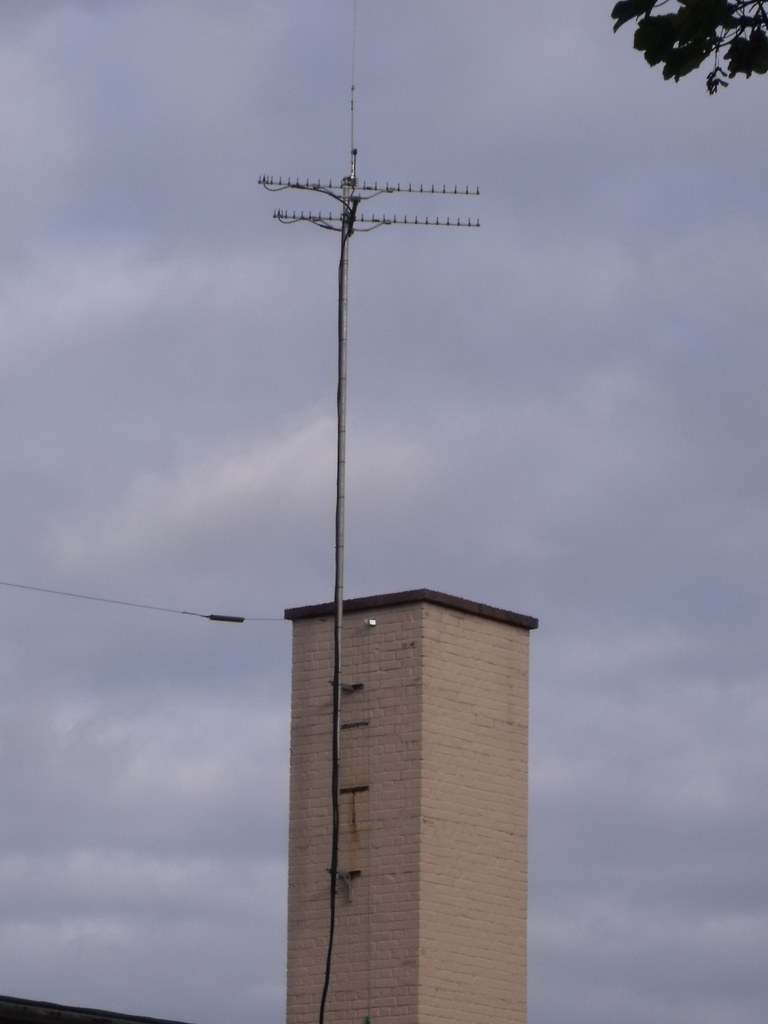
Morocco says yes, with caveats. At Sidi Ifni on the Atlantic coast, fog is collected at Boutmezguida mountain, roughly 35 meters inland from the coast, and channeled into a wider system serving local communities. A 2024 assessment describes it as the world's largest fog-collection project and evaluates its water output, quality and community participation.
The output varies. Considerably.
- Annual average collection ranged between 1.6 and 6 liters per square metre per day over four years
- The fog season, March and April, averaged 8.5 liters per square metre per day
- The peak: 21 liters per square metre per day, recorded in April 2021
Fog occurred year-round at Boutmezguida, but its frequency fluctuated, making storage and supplementary supply essential. The researchers flag fog-yield variability and groundwater pollution as principal challenges, and warn that fog alone as a sole source could produce inconsistent availability. The sky is a supplier, not a contract.
Could the Façade Become a Water Farm?
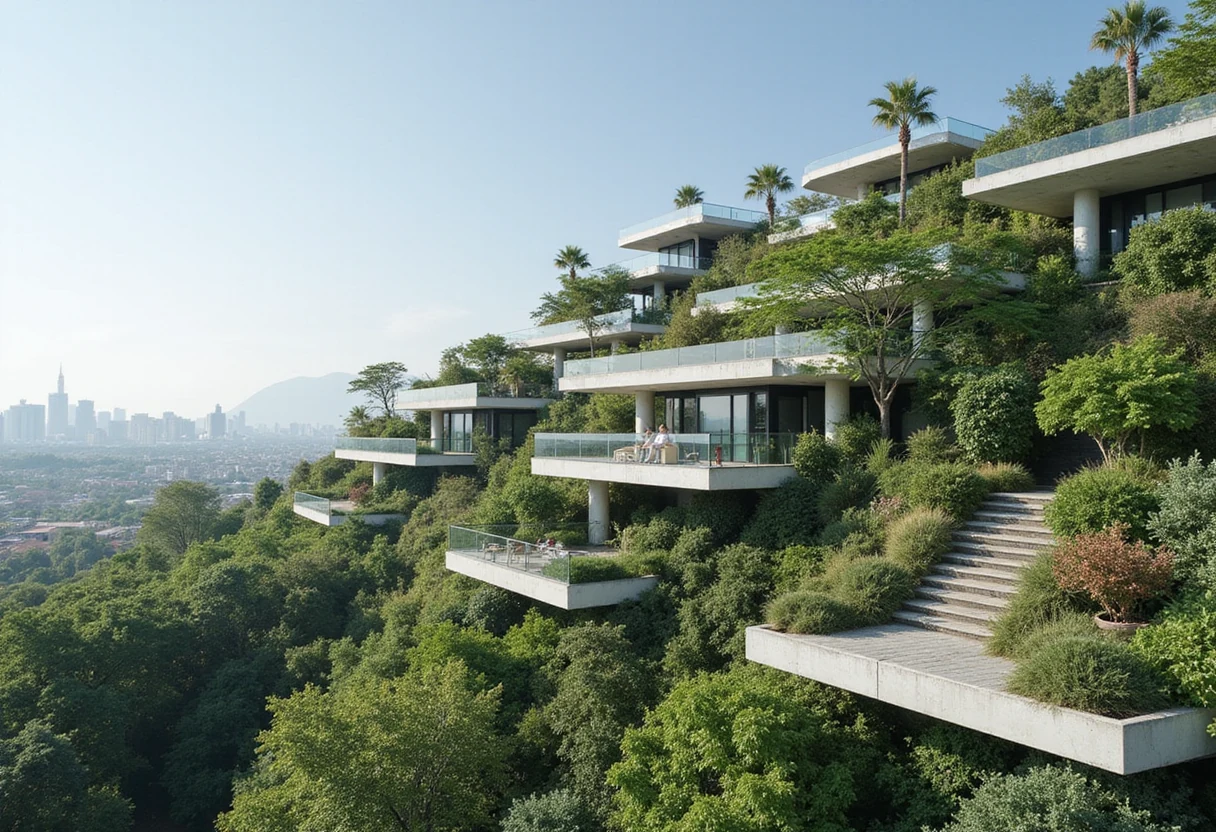
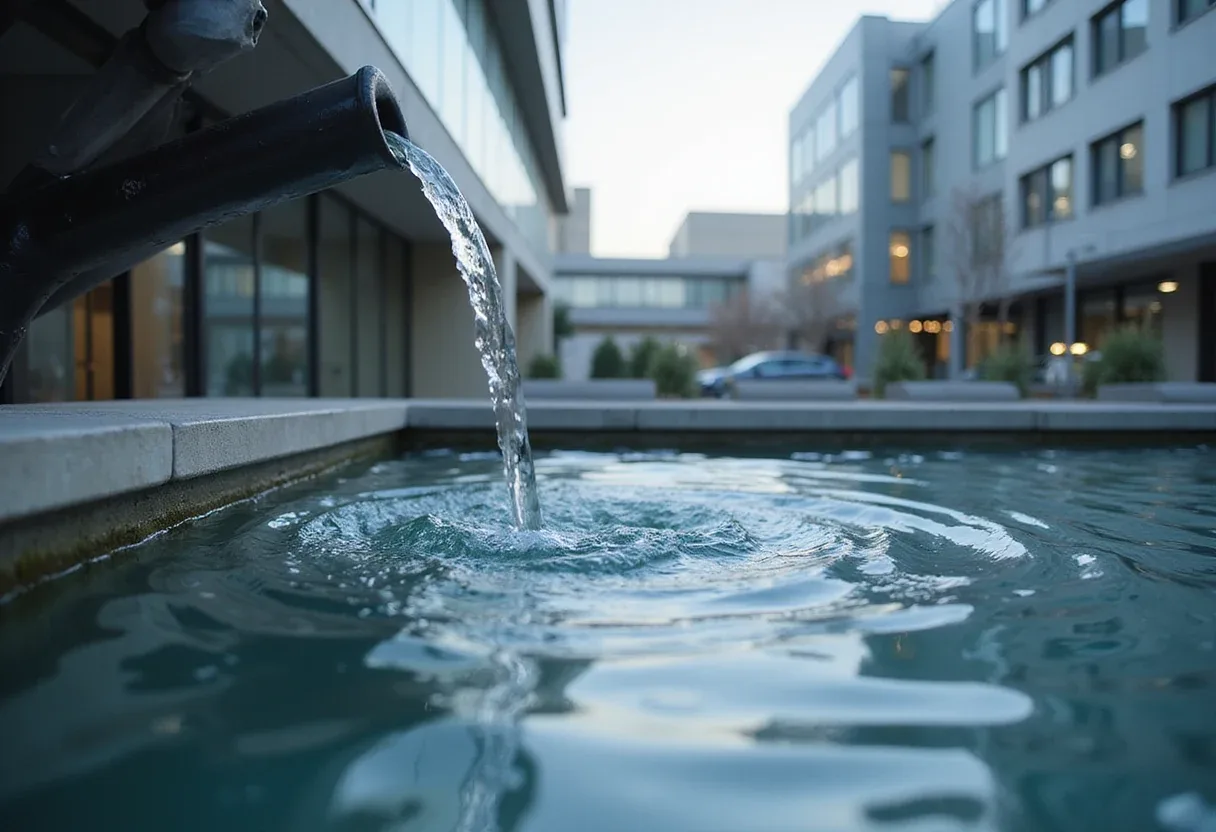
Research into atmospheric water harvesting on building envelopes suggests exactly that. Orientation, surface area, material properties and air exposure become environmental design variables. Roofs could become condensation surfaces. Screens could become fog collectors. Courtyards could hold collection and storage — while the structures providing shade keep the collection surfaces exposed to moving air.
There's an elegant logic here. Architecture has always negotiated with the atmosphere: keeping rain out, tempering heat, admitting daylight, directing air. Harvesting adds one more task to the same negotiation — collecting water from conditions buildings already manage.
The limits are equally clear. Architecture cannot design the atmosphere. It can orient a collector toward prevailing fog, maximize surface area, provide storage and reduce dependence on distant infrastructure. It cannot guarantee the fog arrives. Reservoirs, treatment plants and distribution networks operate largely outside the city's architectural experience; uncovered fog collectors move that infrastructure into view — with everything that visibility entails.
In practice, atmospheric water would operate alongside storage, treatment and conventional supply. Not instead of them. The ArchDaily analysis, part of its month-long topic The Architecture of Water: Territories, Tensions & Transformations, frames it plainly: harvesting adds another source to the wider water network, one whose performance depends on climate, exposure, storage and maintenance. The buildings are ready to try. The atmosphere sets the schedule.
Original: unicef.org
More from Amara Osei
Show full bio
Market editor covering companies, deals and strategy in construction industry, architecture, interior design at Built Current.
134 articles