Fewer Seats, More Suites: Stadium Design Chases Premium Revenue
The $2.1 billion Highmark Stadium holds 10,000 fewer seats than its predecessor as teams trade capacity for premium clubs, lounges and player amenities.
- Section
- Construction
- Author
- By Marcus Bennett
- Filed
- Length
- 4 min read
Key takeaways
- Highmark Stadium in Orchard Park, New York, cost $2.1 billion and opened Sept. 17 with about 60,000 seats — 10,000 fewer than its predecessor; Gilbane and Turner built it as a joint venture.
- M&T Bank Stadium (1998) received a $480 million renovation, while Nissan Stadium (1999) is being replaced by a $2.1 billion new venue opening in 2027.
- Audio and visual systems once took 3% to 5% of construction cost and can now reach 12%, according to Mortenson's Logan Gerken.
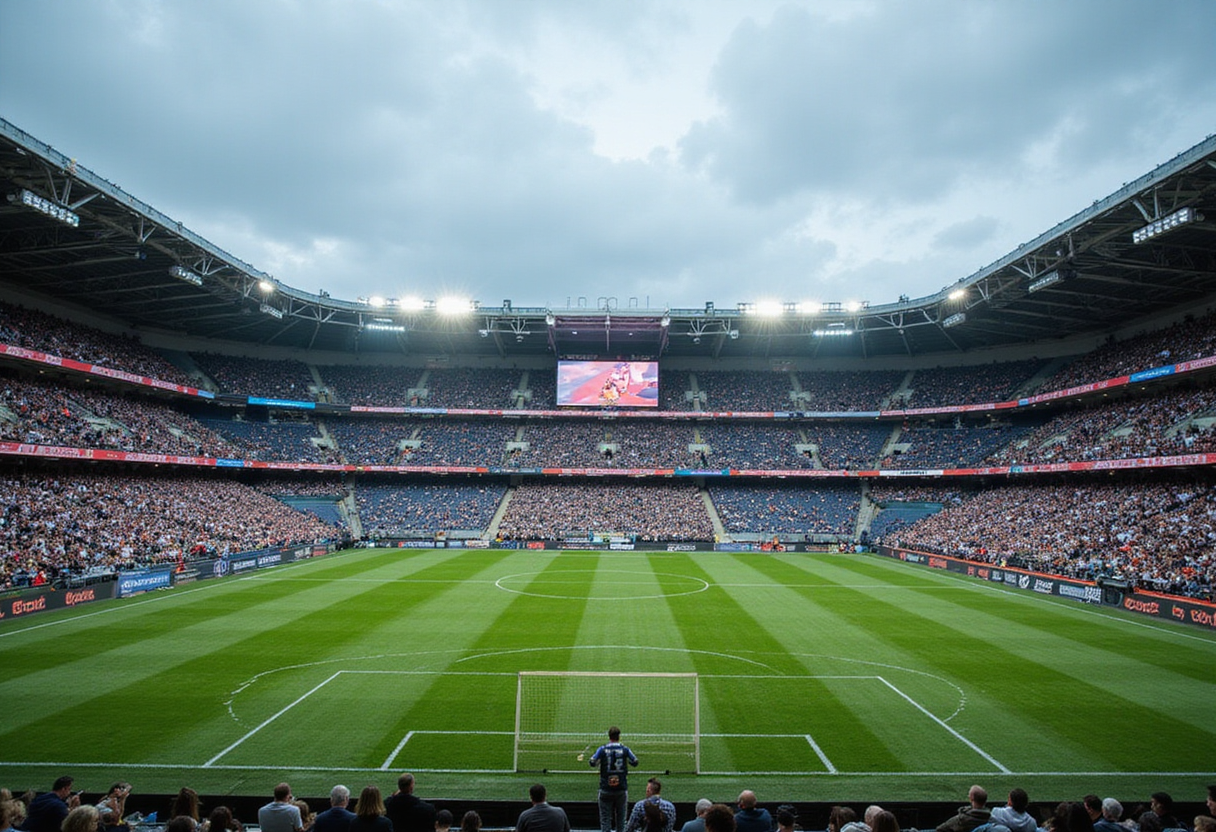
The $2.1 billion Highmark Stadium in Orchard Park, New York, opened Sept. 17 with roughly 60,000 seats — 10,000 fewer than its predecessor — as the Buffalo Bills beat the Detroit Lions 41-31 in the venue's inaugural game. A joint venture of Gilbane Building Co. and Turner Construction built the project.
The smaller capacity is no outlier. Sector experts say teams are pivoting away from maximizing crowd size toward premium offerings, reshaping how professional franchises build and renovate their venues.
"I think the biggest change is the formula. Like the DNA of what makes a great stadium, arena or ballpark is changing," said Logan Gerken, vice president for Minneapolis-based Mortenson. The firm has built numerous sports venues, including the $1.9 billion Allegiant Stadium for the Las Vegas Raiders with project partner McCarthy Building Cos. "It used to be about total capacity. Now the conversation is really about premium percentage."
Premium, premium, premium
Square feet per seat has climbed as premium offerings multiply, according to Gerken. Those offerings include boxes, suites, lounges and exclusive club areas or restaurants. Venues built in the late 1990s or early 2000s averaged between three and five enhanced experiences. New builds now target nine to 12.
The shift tracks how fans consume sports, said Craig Schmitt, co-director of Atlanta-based architect EwingCole's sports practice. High-definition televisions and streaming apps have made watching from home a richer experience, forcing owners to pack more gameday entertainment into the physical venue — especially in sports with considerable deadball time like baseball and football.
"I think what's occurred is people don't want to sit in their seat necessarily for nine innings of a baseball game or necessarily even four quarters for a football game," said Schmitt, who follows the Pittsburgh Steelers and Philadelphia Phillies. Baseball, he noted, contains only about 15 minutes of actual action.
"Which begs the question over the course of a three-hour game, what is everybody doing for the other two hours and 45 minutes?" Schmitt said.
That pressure extends to food service and building systems. "Cold chicken tenders made in an offsite kitchen and brought there are not going to deliver the experience that our clients are looking for," said Lee DeLong, CEO of the capital group for Bethesda, Maryland-based Clark Construction. The result: more robust mechanical, electrical and plumbing systems for kitchens, concession areas and lounges.
Renovate or rebuild?
Two roughly contemporaneous NFL venues show the fork in the road. M&T Bank Stadium, home of the Baltimore Ravens since 1998, completed a $480 million renovation over the last three offseasons, finishing this summer ahead of the regular season. Nissan Stadium in Nashville, Tennessee, which opened in 1999 as home of the Tennessee Titans, is being replaced outright by a $2.1 billion venue of the same name — construction started in 2024, with opening set for 2027.
Experts said the renovate-or-rebuild conversation is long and complex, and often hinges on what existing structures can handle.
"Very few buildings that were built in the late '90s, early 2000s have the bones to be able to receive those kind of upgrades and still function well," Gerken said of the MEP demands that new clubs and lounges impose.
Screens are one driver. Scoreboards and jumbotrons have ballooned in size beyond the televisions lining concourses, adding to MEP costs. Audio and visual systems once took 3% to 5% of total construction cost, according to Gerken. That share can now reach as high as 12%.
Locker rooms and player amenities
End-use considerations have also evolved for the teams occupying the building. Today's pro athletes deploy more resources for diet, exercise, performance and recovery, and that has changed the design of locker rooms and clubhouses, Schmitt said.
"They were a place to change your clothes, shower, get a meal. Maybe there's a weight room and you do a little conditioning before or after the game," he said. "The amenities are now two and three times the size of what they used to be."
The rise of women's sports, including the WNBA and NWSL, has created new design needs for women athletes — considerations that can differ for reasons of privacy or the nature of media coverage inside the venue.
"As each sport becomes more inclusive, it only makes sense that the spaces that support them are appropriately sized and of equal standing," DeLong said.
MEP requirements extend to team facilities as well. Some venues now contain medical centers or offices where coaches and players meet, gameplan and review film.
"These are not just gameday facilities anymore," Gerken said — a formula change that owners like the Titans, with a 2027 opening on the calendar, are betting billions on.
Original: techtarget.com