Colheita Table Concept Folds One Steel Sheet Into Its Own Legs
Fabrício Auler's Colheita concept cuts one steel sheet with leafcutter-ant-inspired curves, folding the tabletop into its own legs while movable wooden supports slide along the edges.
- Section
- Interiors
- Author
- By Amara Osei
- Filed
- Length
- 3 min read
Key takeaways
- The Colheita Coffee Table is a concept by designer Fabrício Auler.
- The table starts as a single laser-cut steel sheet, folded so three attached sections form its legs.
- The rounded cut ends serve as stress relief where flat metal bends into a leg.
- Movable wooden hemispheres slot via grooves onto the folded steel edge and act as sliding platforms.
- The project remains a concept with no dimensions or load capacity provided.
By Amara Osei
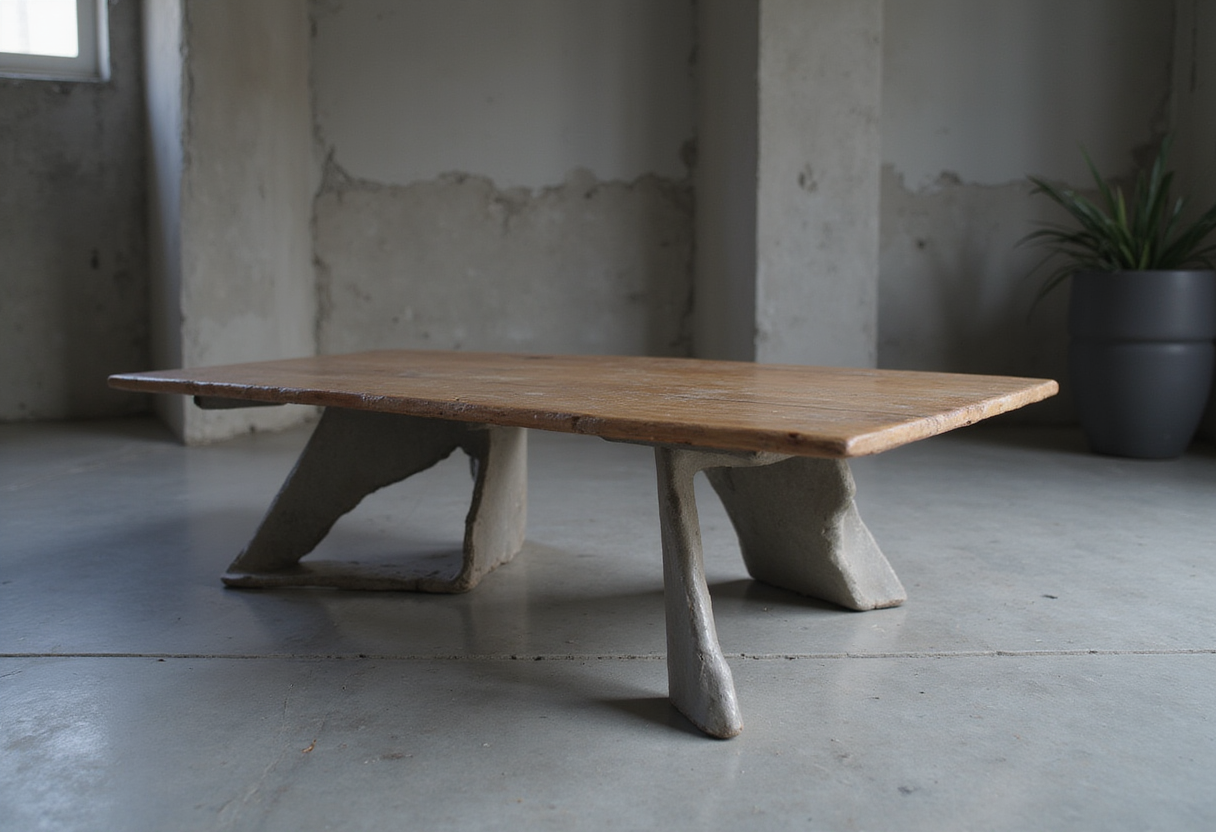
The Colheita Coffee Table concept starts with a single laser-cut steel sheet and folds three broad sections of it down to the floor, so the tabletop becomes its own legs. Designer Fabrício Auler takes his cue from leafcutter ants — not their picnic manners, but the curved cuts they leave in harvested leaves.
The ant reference gives the table its construction logic rather than a decorative motif. The bent sections stay attached to the surface, leaving openings where a conventional tabletop would be solid. No separate legs. No joints underneath. The silhouette reads as unusual, but the logic behind it is easy to follow.
Why the curved cuts actually matter
The rounded, enlarged ends of the cuts aren't there purely for looks. They provide relief during bending, easing stress at the exact points where flat metal turns into a leg. The graceful curves resemble a harvested leaf and serve a fabrication purpose at the same time. That's a rare bit of honesty in biomimicry — the shape earns its keep.
The single-sheet approach is intended to cut component count and material waste, though the project makes no claim of waste-free manufacturing. Fewer parts, fewer seams. Still steel, still cut by laser.
What do the wooden pieces do?
The wooden elements look like small bowls but work as platforms. Each hemisphere has a groove that slots onto the folded steel edge, and each one slides along it. The wood adds warmth and visible grain to the dark metal while giving a glass or a small object its own resting spot.
The arrangement doesn't lock in place after you've chosen a spot for the table. You can pull a support closer to your seat or spread them around when friends sit on different sides. The project presentation says the pieces also help stabilize the upper surface. So they work for a living, not just to soften the steel.
The trade-offs, plainly
All those openings leave less uninterrupted space for what usually piles up on a coffee table. A book or a tray needs solid ground beneath it. A loose remote won't forgive careless placement. The gaps do leave room for trailing plants and let light pass through. Colheita asks you to arrange your clutter more deliberately, which won't suit every housekeeping habit.
The project also explores an unfinished carbon steel version, where oxidation would shift the surface's colors and patterns over time. That's a different proposition from furniture built to keep an immaculate finish. The presentation doesn't explain how to manage that aging around spilled drinks or routine cleaning. Patina and coffee, it turns out, may negotiate poorly.
The name is doing some work too. Colheita means "harvest" in Portuguese — a nod both to the ants and to gathering around the table.
Is it more than a concept?
Not yet. The project remains a concept with fabrication work documented, not a verified retail offering. No dimensions. No load capacity. Before trusting one of those sliding wooden platforms with hot coffee, you'd want to know how firmly it stays put when someone nudges the table.
Until those numbers exist, Colheita stands as a tidy argument that a coffee table can carry its nature reference in its structure — and that sometimes the ants got there first.
Original: linkedin.com
More from Amara Osei
Show full bio
Market editor covering companies, deals and strategy in construction industry, architecture, interior design at Built Current.
127 articles