Key takeaways
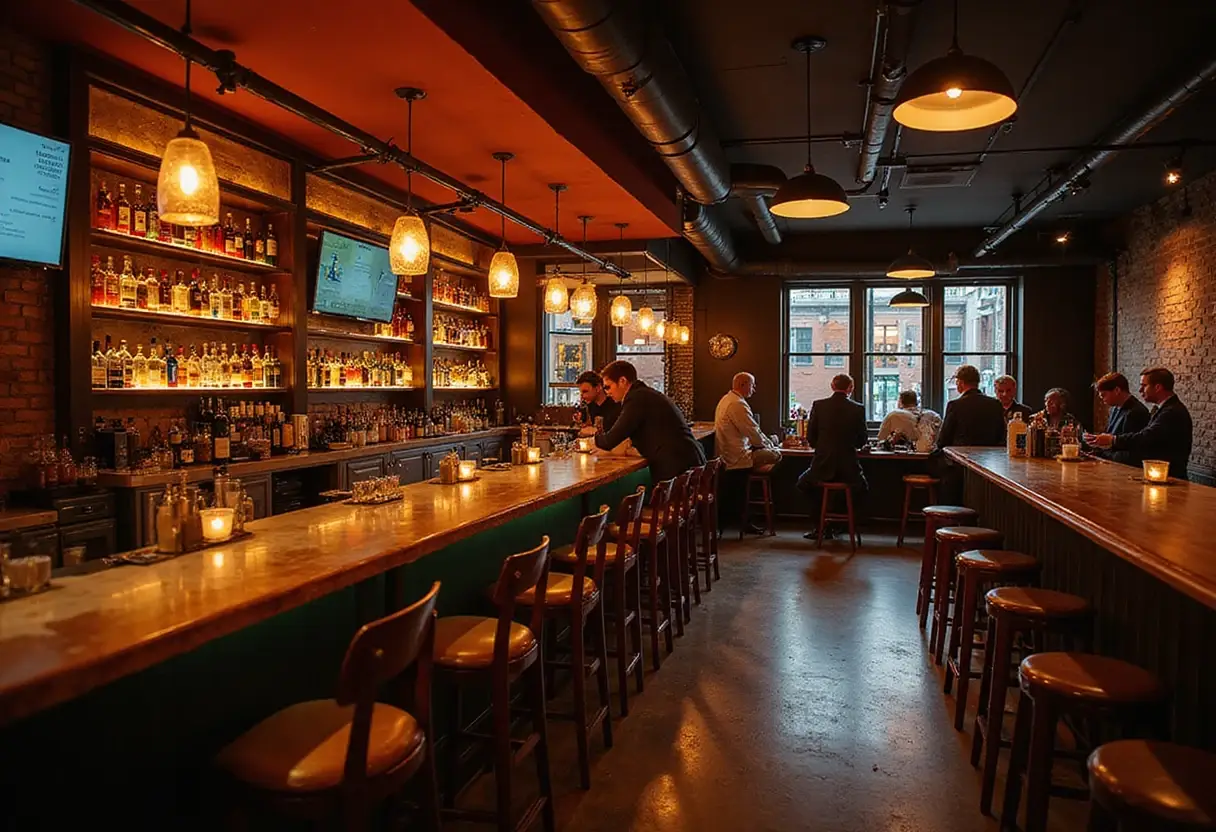
- The Limen Bar was designed by CLLC, the Paris studio of Charlotte Taylor and Pauline Leprince, for gallerist Max Radford
- It occupied Oranj in East London for one week during Frieze, then travels to Paris for 21–24 October at 10 Villa Riberolle, 75020
- The bar's 'imitation surfaces' mimic the look of stone and metal while keeping materials light enough to assemble, disassemble and transport
- Collaborators include PS Lab (lighting), Mateo Garcia Audio (sound), Lewis Kemmenoe (lamps) and Eddie Olin (steel I-beam bar stools)
By Elena Vasquez
A bar designed to look like stone and metal but built to be packed into a truck: that's the core trick of the Limen Bar, created by Parisian studio CLLC for design gallerist Max Radford, and it's already moving — from East London to Paris, where it opens 21–24 October at 10 Villa Riberolle, 75020.
What is the Limen Bar?
CLLC, the newly established Paris studio led by Charlotte Taylor and Pauline Leprince, designed the bar as a temporary space commissioned by Radford, who works as a design gallerist and interior designer. It took residence for a week at Oranj in East London during Frieze week, then moves to its next destination in Paris this week.
The name comes from the Latin word for threshold. The creators describe it as a space of transition — a visual moment between inside and outside.
The concept is simple in mechanics: rather than stage a conventional exhibition, Radford and CLLC built something that works. Spatial design, furniture, objects, wine, food and sound all meet in a functioning bar. It's a gathering place that doubles as a cultural argument.
How do you make a heavy bar travel?
The bar itself has a symmetrical form that, in the designers' words, nods to a contemporary interpretation of postmodern aesthetics. The materials were conceived for ease of assembly, disassembly and transport.
Here's the mechanism. The bar appears solid and hefty, but it's made of what the designers call 'imitation surfaces' — finishes that reflect the aesthetic of stone and metal while keeping the actual material light.
'Materials conventionally associated with weight and longevity become lighter, thinner and more theatrical,' reads a note accompanying the project.
That lightness is the whole business model. The bar is conceived to travel to different cities for further activations, following the creative calendar's most crucial moments of the year — Frieze in London now, Paris next.
Who else built it?
The project is a collaborative stack. CLLC designed the bar and created glass and metal glassware that continues the geometric language of the main piece. PS Lab handled lighting, and Mateo Garcia Audio supplied the sound elements.
Radford brought in satellite objects and furniture from his own collaborators:
- Lewis Kemmenoe: timber lamps laid with aluminium elements, a continuation of his explorations in metal and patchwork
- Eddie Olin: bar stools built from raw steel I-beams, each topped with a black-stained ash seat
The newly commissioned objects, Radford explains, are imagined to respond to the behaviours and gestures usually accompanying a bar: leaning, perching and gathering, serving, cooling, carrying and lighting.
What does this change?
The Limen Bar treats the bar counter — not the plinth — as the venue for design display. Every object has to survive contact with spilled wine and elbows, and every surface has to survive being crated and shipped. That's a rare brief for collectible design, and it explains the 'imitation surfaces': the only way marble-heavy aesthetics travel is if nothing is actually marble.
Next stop: Paris, 21–24 October, at 10 Villa Riberolle in the 20th arrondissement — the first test of whether the threshold holds up on the road.
Original: google.com
More from Elena Vasquez
Show full bio
Senior reporter covering money, funding and market shifts around construction industry, architecture, interior design at Built Current.
171 articles