Brumadinho Memorial and BIAU 2026 Anchor a Month of Brazilian Debate
Brazil's month in architecture: Gustavo Penna's Brumadinho Memorial, BIAU 2026 in Brasília, flood reconstruction and UNESCO slavery-memory sites.
- Section
- Architecture
- Author
- By Marcus Bennett
- Filed
- Length
- 3 min read
Key takeaways
- The Brumadinho Memorial by Gustavo Penna commemorates 272 victims of the 2019 dam collapse across a 1,220-square-meter site opened in 2025.
- The XIV Ibero-American Biennial ran November 3–6, 2026 in Brasília under the theme 'Cuidar la Vida', recognizing twelve works.
- Yuri Vital Arquiteto won the UFC competition in Fortaleza from 64 submissions, announced November 5, 2026, for an 11,000-square-meter complex.
- UNESCO added Valongo Wharf, Sociedade Protetora dos Desvalidos and Serra da Barriga to its slavery-memory network.
- The Assis Reis archive, over 3,000 items, was donated to Casa da Arquitectura in Portugal.
By Marcus Bennett
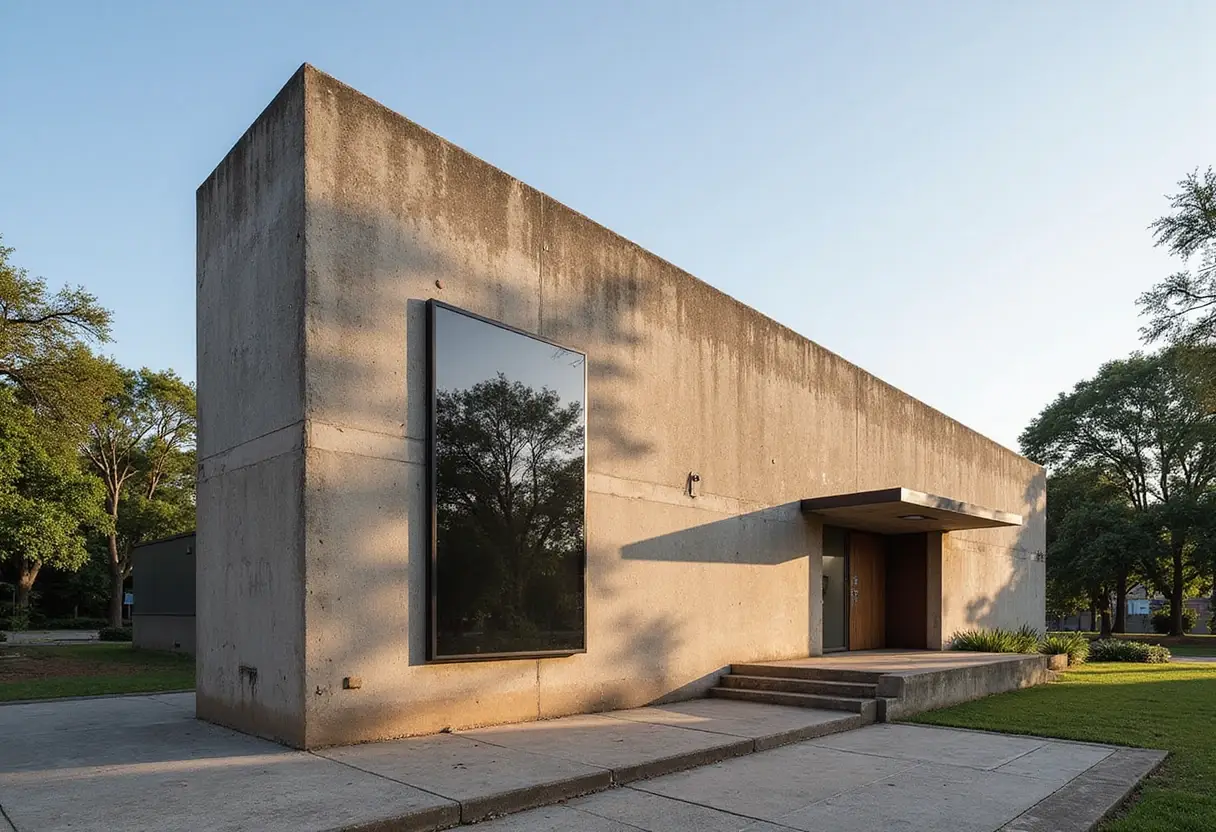
Gustavo Penna's Brumadinho Memorial, opened in 2025 at the site of the 2019 Córrego do Feijão dam collapse, commemorates 272 victims with a 230-meter excavated path and 272 yellow ipê trees—one for each life lost. The 1,220-square-meter project, developed with the victims' families, anchors a month in Brazilian architecture defined by memory, climate resilience and territory.
What did the Ibero-American Biennial change?
The XIV Ibero-American Biennial of Architecture and Urbanism (BIAU) ran November 3 to 6 in Brasília under the theme "Cuidar la Vida" (Caring for Life). The program organized itself around four themes: water, vegetation, housing and communities. Venues included SESI Lab, the University of Brasília and the Teatro Nacional Cláudio Santoro.
The edition recognized twelve works across its Projects and Publications categories, plus five honorable mentions in Projects. The selected works addressed access to housing, community life, environmental challenges and the integration of natural systems into the built environment, while the program reflected on Brasília's urban history and the tensions between modernist planning and contemporary living conditions.
How are flooded cities rebuilding?
More than two years after the May 2024 floods in Rio Grande do Sul, Porto Alegre and Cruzeiro do Sul show two contrasting recovery strategies. Porto Alegre strengthens its existing flood protection and drainage infrastructure. Cruzeiro do Sul relocates the severely affected Passo de Estrela neighborhood to higher ground.
The divergence raises questions for practitioners: whether rebuilding can address the planning decisions that produced vulnerability, and what role nature-based solutions, adaptable planning and preserved social networks play in recovery beyond replacing damaged buildings.
Why does an architect's archive matter now?
October marked the centenary of Francisco de Assis Couto Reis (1926–2011), who worked primarily in Salvador, Bahia. Assis Reis connected modernist principles with local climatic, geographical and cultural conditions, from the São Francisco Hydroelectric Company (CHESF) headquarters to residential buildings and urban renewal proposals.
Casa da Arquitectura in Portugal recently received his archive—more than 3,000 items—creating an opportunity to examine his design process and his contribution to Brazilian modern architecture.
Featured projects
- Brumadinho Memorial / Gustavo Penna Arquiteto e Associados — Concrete incorporating pigment from mining waste, framed natural light and a reflecting pool shape the visitor experience along the path from entrance pavilion to lookout.
- Sertão Block and Amparo House / Asa Arquitetos — Completed in 2026 in Princesa Isabel, Paraíba, the 622-square-meter residence uses independent volumes, hollow brick elements and deep roof overhangs for ventilation and solar protection; the separate Sertão Block sits directly on a rocky outcrop as a private lookout.
- Veras Cultural Center / Terra e Tuma Arquitetos Associados — Completed in 2023 on the urban fringe of Florianópolis's Córrego Grande hills, the 1,100-square-meter vertical building stacks exhibition spaces, open studios, workshops, a restaurant, a market and a rooftop community garden within a concrete and exposed brick structure.
On the radar
UNESCO added three Brazilian sites to its Network of Historic and Memorial Sites Related to Slavery and the Slave Trade: Valongo Wharf in Rio de Janeiro, Sociedade Protetora dos Desvalidos in Salvador, and Serra da Barriga in União dos Palmares, Alagoas—territory of Quilombo dos Palmares. The network, established in 2024, promotes preservation through education, research and international cooperation.
São Paulo-based Yuri Vital Arquiteto won the national competition for the Arts, Culture and Events Center at the Federal University of Ceará in Fortaleza, announced November 5, 2026, chosen from 64 submissions. The roughly 11,000-square-meter, 14-story complex on the former São Pedro Building site will hold a cinema, exhibition spaces, a library, multipurpose rooms and a performance hall, with a public square, rooftop garden and open-air amphitheater. The design pays tribute to artist Sérvulo Esmeraldo.
Together these developments signal a national agenda in which memory, climate adaptation and community program—rather than signature form—increasingly determine what gets built in Brazil.
Original: agenciabrasil.ebc.com.br
More from Marcus Bennett
Show full bio
Correspondent covering money, funding and market shifts around construction industry, architecture, interior design at Built Current.
343 articles