Armadillo Furniture Clads Six Pieces in Reused German Facade Shingles
Six Armadillo furniture pieces clad in reused 1800s German facade shingles go on show at London's Gallery Fumi until 21 November 2026.
- Section
- Materials & Products
- Author
- By Priya Raman
- Filed
- Length
- 3 min read
Key takeaways
- Six new Armadillo pieces debuted at Gallery Fumi, London, in the Companions exhibition
- The show runs from 6 October to 21 November 2026
- Shingles were sourced partly from a house clad in weathered shingles from the 1800s
- Finishes include water-colour-style wood stains, linseed oil paints, and ebonising baths of tannins, rust and slaked lime
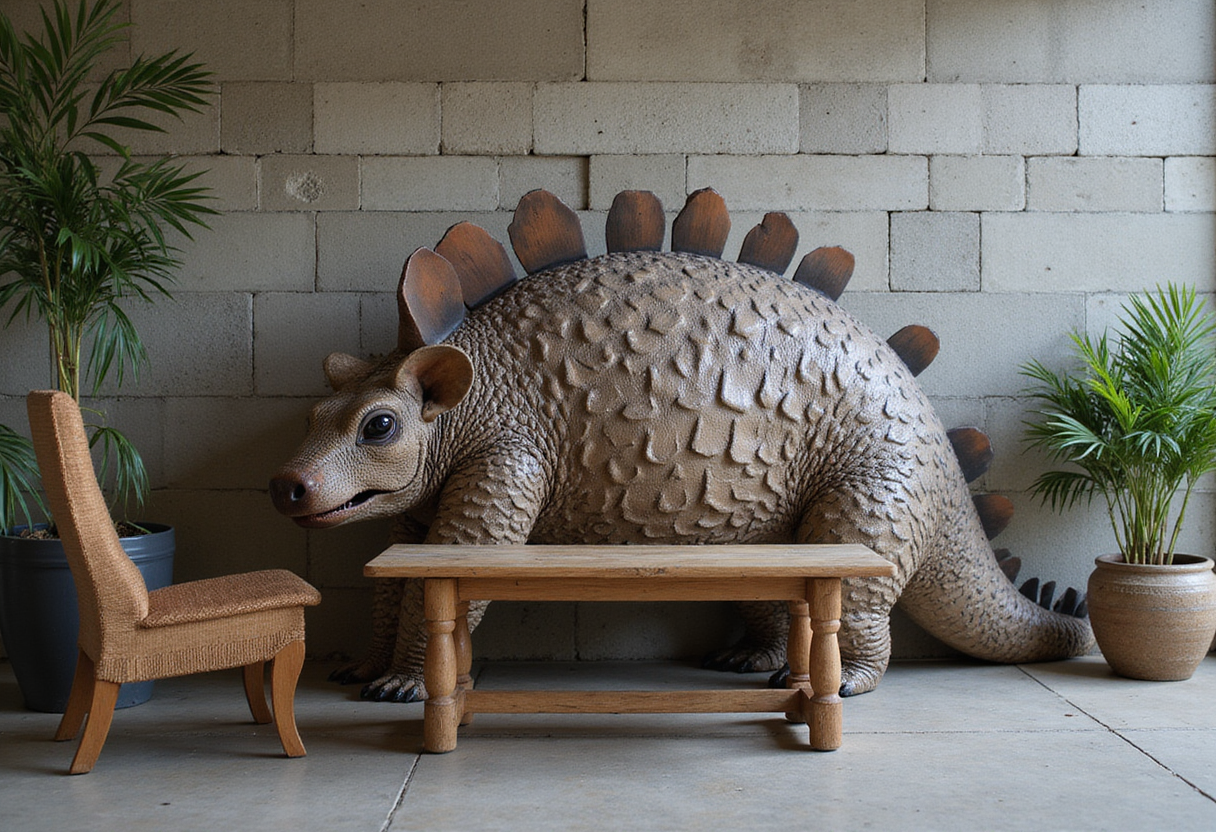
- The series is named after the armadillo shell, whose scales shrink from flat to complex curved areas
By Priya Raman
Six new furniture pieces clad in reused wooden facade shingles went on show at Gallery Fumi in London on 6 October 2026. Designers Lukas Wegwerth and Corinna Dehn call the series Armadillo. The Companions exhibition runs until 21 November 2026.
The shingles come from buildings in Germany's Vogelsberg region. Some were salvaged from the renovation of Wegwerth's grandmother's house, a property clad in weathered shingles from the 1800s. Others came from a construction site in a neighbouring village, and some from an earlier project where the duo made shingles for mobile houses.
What's on show?
The six new pieces break down as follows:
- two cabinets
- a sideboard
- a birdhouse
- a dining table
- a stand-alone screen
The Companions show also includes older pieces from the series. All of them wear the shingled skin in reference to Vogelsberg's traditional architecture.
Why shingles?
The material fixation started with the grandmother's house. Wegwerth and Dehn told Dezeen: "What differentiates a shingle from a piece of wood is very minimal, yet the shingle becomes a system component created from chunks of wood that cannot be used for much else, apart from firewood."
They see a shingled facade as more than cladding. "A shingled facade is a very vital entity, it's a habitat for wild bees and other insects that live in the rain shadow," the designers said. "Visually, it can create an equally vivid and animated appearance."
How are the shingles finished?
The duo cleaned, brushed and sanded every reclaimed shingle before treating the surfaces in several ways:
- wood stains applied "in a very wet stage so the colours can blend into each other, similarly to water colours"
- linseed oil paints on other pieces
- ebonising (a darkening process) through successive baths of tannins, rust and slaked lime
That last process gradually darkens the wood to near-black, visible on the darker table pieces in the show.
Why "friendly monsters"?
The furniture uses organic, playful shapes that read as woodland creatures in scales. That friendly appearance gave the exhibition its name. "Some of the pieces of the Armadillo series are inspired by elements of vernacular architecture like the timber frame house we renovate, others are more organic and animate, like friendly monsters – companions," the artists said.
The curves complicate the shingling. Vertically curved areas need slim shingles; horizontally curved areas call for short or curved ones. "The shapes and sizes of shingles need to be very manyfold and made specifically for a certain spot on the furniture to make it work," Wegwerth and Dehn said. "Going from more flat areas to more complex shapes, the shingles can go from rather big to pretty small, just like you can observe them in the shell of an armadillo or the scale on a fish."
What does this change for the pieces themselves? Their final form stays unpredictable until the end, since the shingle coat's thickness varies with each area's complexity. "The final silhouettes and tonal values only emerge gradually during the process," the designers said.
Gallery Fumi has form with material experiments. Previous shows there included rubber furniture resembling ancient ruins by Study O Portable and Max Lamb's furniture made from cardboard boxes.
Companions stays on display at Gallery Fumi through 21 November 2026. Photography is by Penguins Egg, courtesy of the gallery.
Original: lukaswegwerth.com
More from Priya Raman
Show full bio
News editor covering people, launches and day-to-day practice in construction industry, architecture, interior design at Built Current.
123 articles