Key takeaways
- Apple Music Hall holds 600 people inside London's Battersea Power Station and functions as a venue, recording studio, broadcast facility and production space.
- A 38-foot-wide stage shifts between front-facing and in-the-round configurations, surrounded by a 48-speaker spatial sound system.
- Two recording and mixing studios, a broadcast control room wired for 16 or more cameras, and new Apple Music Radio studios bring performance, radio, recording and video production under one roof.
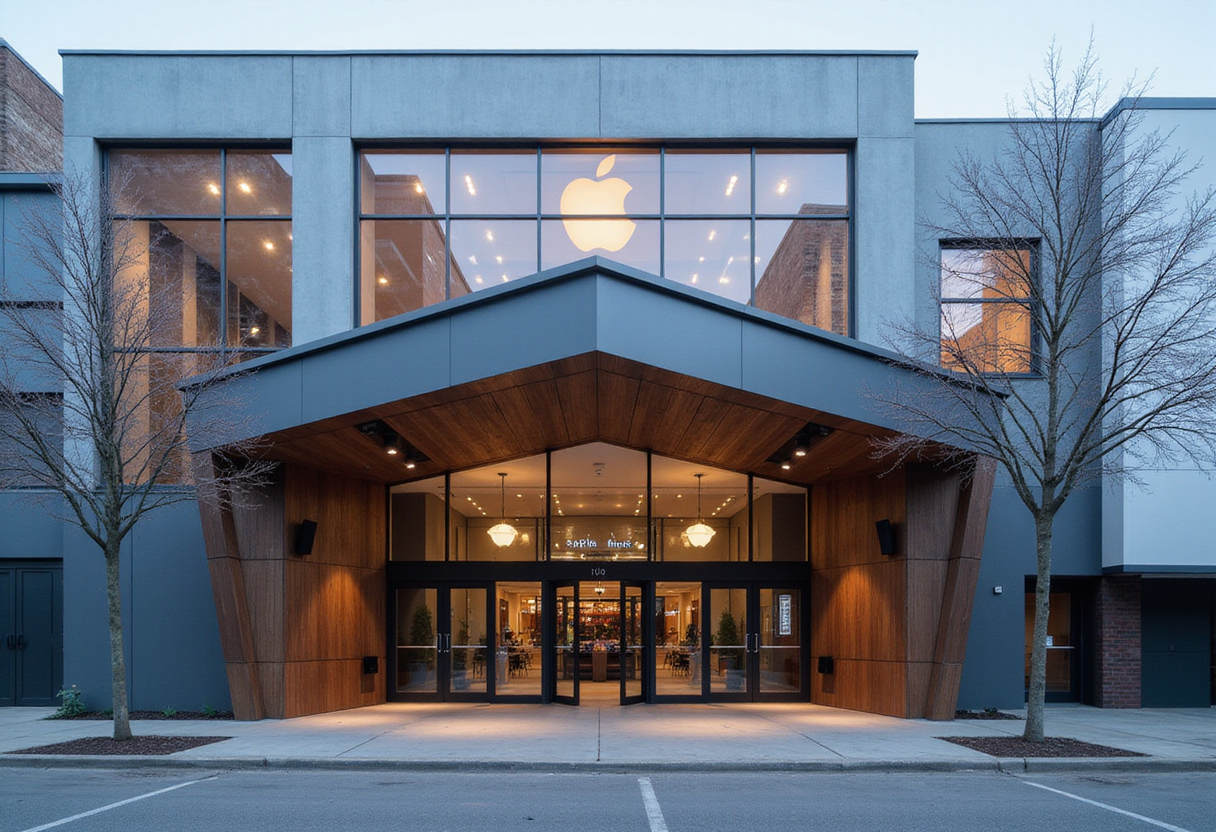
Apple has opened Apple Music Hall inside London's Battersea Power Station, a 600-capacity live music venue that doubles as a recording studio, broadcast facility and production space. Set along the River Thames, the hall hosts intimate performances that can simultaneously become Spatial Audio recordings, multicamera films and global livestreams. Apple has, in effect, built a concert hall where the show does not end when the lights come back on.
The interiors draw on the industrial language of the historic power station rather than competing with it. Heritage brickwork, fluted arches and bronze balconies reference elements found across the restored building, while a large glass wall opens the venue toward the concourse and the river beyond. The design places Apple's typically controlled visual world inside a considerably rougher architectural shell, allowing traces of Battersea's industrial past to remain part of the experience.
48 Speakers Wrap Sound Around 600 Listeners
The auditorium stays deliberately compact. A 38-foot-wide stage can shift between conventional front-facing concerts and immersive, in-the-round configurations, while a 48-speaker spatial sound system surrounds the audience. Apple says the setup combines the closeness of a small venue with the technical infrastructure normally associated with much larger productions, giving artists more control over how a performance is staged and heard.
Behind the curtain, the machinery becomes more elaborate. Two dedicated recording and mixing studios allow performances to be captured as multitrack recordings and mixed in Spatial Audio either live or afterwards. The hall is hardwired for 16 or more cameras feeding into a dedicated broadcast control room, with infrastructure that allows iPhones to capture footage alongside traditional broadcast cameras. A single performance can therefore leave the building as a finished audio recording, a broadcast-ready mix and a multicamera video.
From Live Show to Global Broadcast
Performances staged at Apple Music Hall can be livestreamed internationally through Apple's platforms, extending a 600-person room far beyond Battersea. The opening is accompanied by new Apple Music Radio studios within the same London complex, from which the service's London-based presenters and programs will now broadcast live. Together, the spaces bring performance, radio, recording and video production under one roof rather than treating each as a separate stage in the process.
The project continues Apple's long relationship with music, from the iPod and iTunes era to Apple Music and its current push into immersive audio. But Apple Music Hall gives that largely digital ecosystem a very physical address. Here, architecture works as part venue and part production apparatus: brick arches and bronze balconies frame the audience out front, while studios, cameras and mixing desks quietly prepare the same performance for everywhere else.
Project info: Apple Music Hall — design team: Apple — location: Battersea Power Station, London, UK.
Original: apple.com