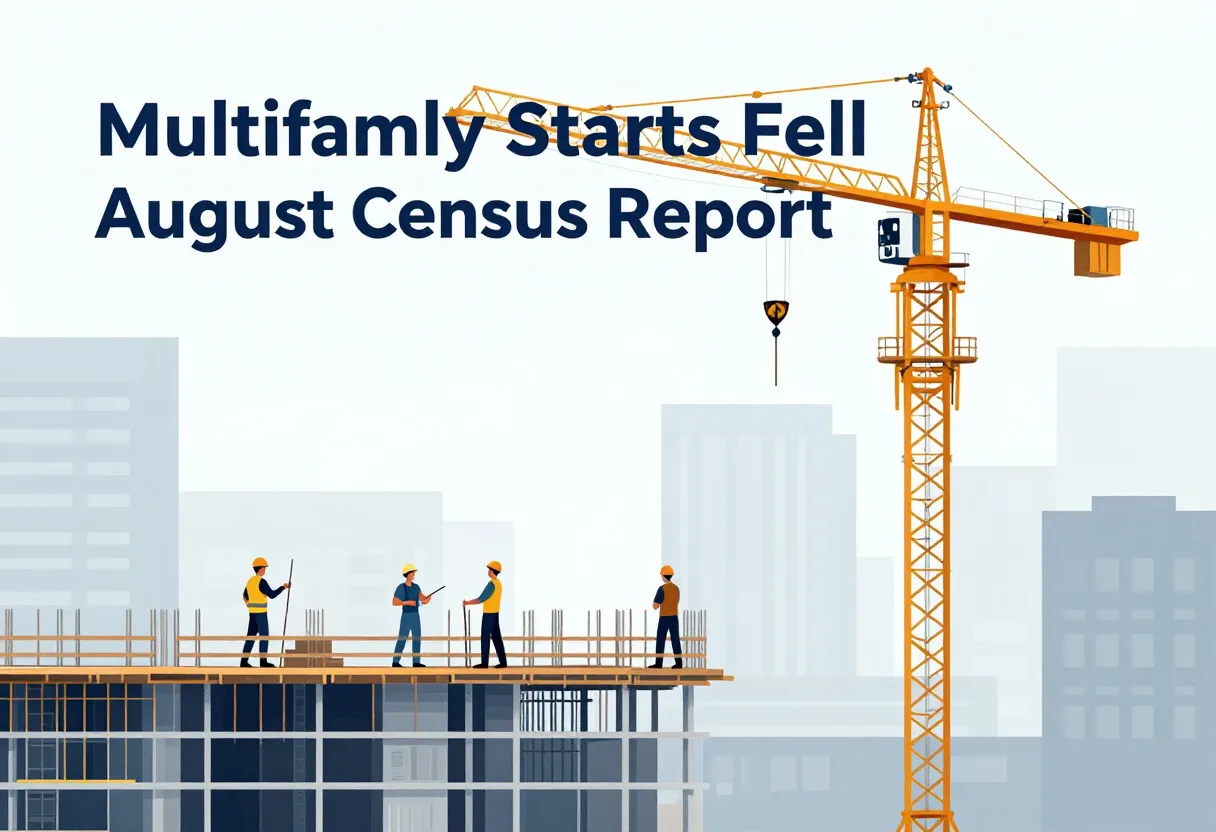
Single-family permits fell 3.0% as multifamily rose 4.1%
Single-family permits fell 3.0% to 689,884 through September 2026, while multifamily permits rose 4.1% to 393,778, with sharp regional and state differences.
- Section
- Construction
- Author
- By Priya Raman
- Filed
- Length
- 3 min read
Key takeaways
- Single-family permits totaled 689,884 through September 2026, down 3.0% from 711,020.
- Multifamily permits totaled 393,778 through September 2026, up 4.1% year over year.
- Northeast multifamily permits rose 28.2%, while single-family permits fell 11.8%.
- Kansas multifamily permits rose 99.6%, while Vermont’s fell 72.1%.
- The 10 leading states accounted for 62.2% of single-family and 60.8% of multifamily permits.
By Priya Raman
Single-family permits fell 3.0% to 689,884 nationwide through September 2026, while multifamily (multi-unit housing) permits rose 4.1% to 393,778.
A widening national split
The year-to-date (YTD) comparisons cover the first nine months of 2026 and the equivalent period in 2025. Single-family permits fell from 711,020 in 2025 to 689,884 in 2026.
The first nine months produced a clear divergence: single-family permitting remained under pressure from affordability constraints and elevated construction costs, while multifamily activity strengthened across several regions and states.
Multifamily permitting gained 4.1% year over year. That gain contrasts with the contraction in single-family authorization and points to a changing mix of residential projects.
Regional divergence
The September 2026 data show a pronounced regional split. Three of four regions lost single-family permits, while three of four also recorded multifamily growth, revealing a national average that conceals sharply different local building pipelines.
- Northeast: Single-family permits fell 11.8%, the largest regional decline. Multifamily permits rose 28.2%, the strongest regional increase.
- West: Single-family permits fell 5.7%. Multifamily permits increased 9.7%.
- Midwest: Single-family permits rose 0.6%, making it the only region with year-over-year growth. Multifamily permits increased 5.3%.
- South: Single-family permits fell 1.9%. Multifamily permits declined 5.8%, making it the only region with a multifamily decrease.
The data attribute the South’s 5.8% multifamily decline largely to reduced permitting activity in major metropolitan areas across the region.
Single-family concentration
Nineteen states and the District of Columbia recorded increases in single-family permits. Their gains ranged from 45.5% in the District of Columbia to 0.5% in Wisconsin. The other 31 states posted declines.
Nevada recorded the steepest state-level decrease, with single-family permits falling 25.2%.
Concentration sharpened the single-family picture: the 10 highest-volume states captured 62.2% of all permits nationwide, led by Texas with 108,433 permits during the first nine months of 2026.
Texas also recorded a 3.1% year-over-year decline. Florida ranked second and fell 0.6%. North Carolina ranked third and lost 7.9% of its single-family permits.
Multifamily shifts
Twenty-nine states and the District of Columbia recorded increases in multifamily building permits. Twenty-one states posted declines.
Kansas posted the largest percentage increase, with multifamily permits rising 99.6%, from 3,041 to 6,071 units. Vermont recorded the steepest decline, falling 72.1%, from 982 to 274 units.
The multifamily distribution was similarly concentrated, with the 10 leading states accounting for 60.8% of nationwide permits even as their performance split in opposite directions.
Texas issued the largest number of multifamily permits, but its total fell 17.9% from the same period in 2025. California ranked second and increased 23.2%. Florida ranked third and recorded a 24.2% decline.
The permitting data also flag the 10 metropolitan areas with the highest single-family and multifamily totals. The available text names none of those markets or provides their counts.
What does this divergence change for developers and local planners?
For developers and local planners, the permit mix now points to more multifamily construction, but it does not signal an easy answer to affordability or a broad-based recovery in new housing.
Multifamily projects hold the stronger national growth position. Single-family projects face a 3.0% national decline, with the steepest contraction in the Northeast. Regional and state swings make national totals a poor guide to local conditions.
The near-term pipeline is more tilted toward multifamily projects, though falling single-family permits and elevated construction costs constrain the supply response.
Source: eyeonhousing.org
More from Priya Raman
Show full bio
News editor covering people, launches and day-to-day practice in construction industry, architecture, interior design at Built Current.
318 articles