Parametricism, 18 Years On: The Style That Became a Look
Schumacher's 2008 Venice manifesto called parametricism "the great new style after modernism." Eighteen years on, its technique, forms and social diagnosis have come apart — replaced by carbon rules.
- Section
- Architecture
- Author
- By Elena Vasquez
- Filed
- Length
- 6 min read
Key takeaways
- Patrik Schumacher's 'Parametricism as Style' was presented in September 2008 at the Dark Side Club, alongside the 11th Venice Architecture Biennale.
- David Rutten released Grasshopper (initially Explicit History) as a free Rhino plug-in in September 2007; it was folded into Rhino 6 in 2018.
- Zaha Hadid Architects' Beijing Daxing International Airport opened in 2019; the firm's printed concrete footbridge Striatus was built in Venice in 2021 with ETH Zurich's Block Research Group.
- Schumacher's 2017 revision, Tectonism, reframed form as emerging from structural behavior and machine capability.
- Embodied carbon is now limited by regulation in countries such as France and Denmark, inverting parametricism's ban on repetition.
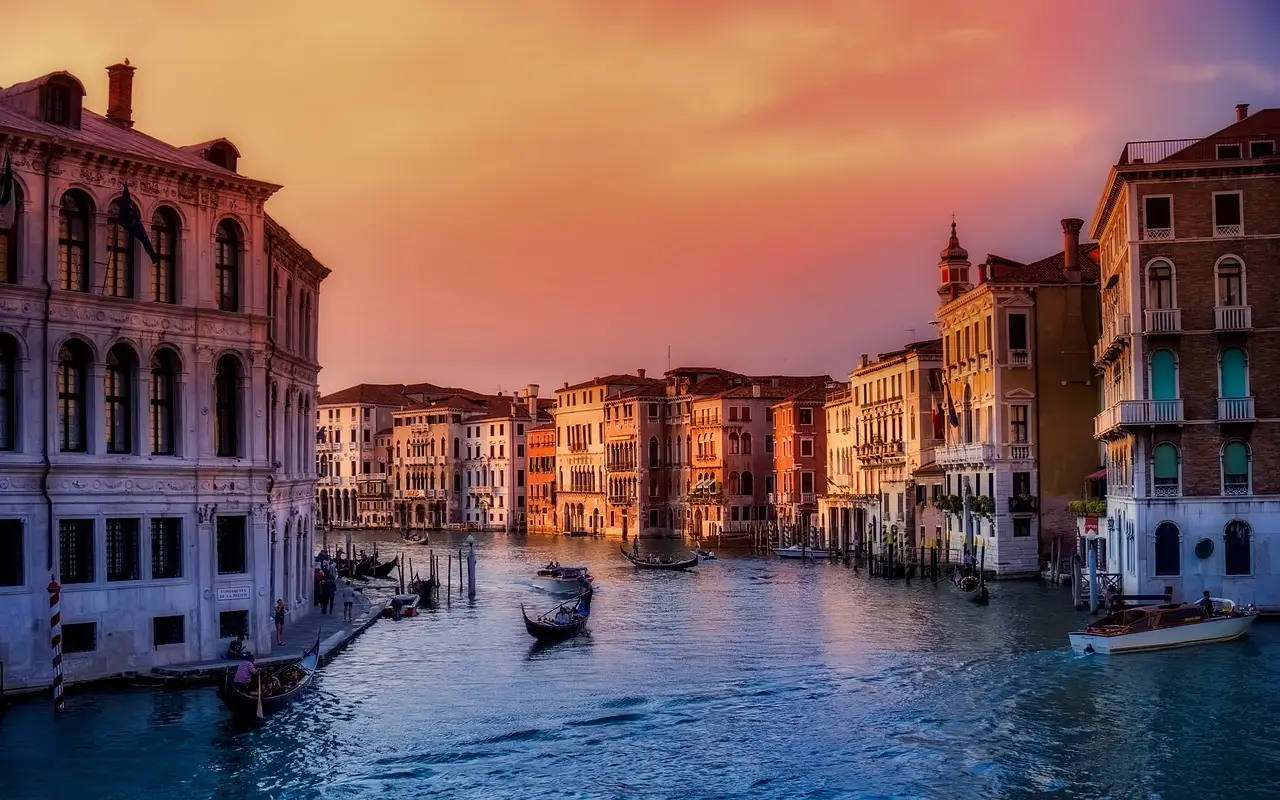
Patrik Schumacher declared parametricism "the great new style after modernism" in September 2008, at sessions organized alongside the 11th Venice Architecture Biennale under the name of the Dark Side Club. Eighteen years later, the argument goes, that style has dissolved into an appearance — and the discipline has found a replacement research program in carbon, arriving not by manifesto but by regulation.
The text, "Parametricism as Style," written when Schumacher was a partner at Zaha Hadid Architects, recast Postmodernism and Deconstructivism as "transitional episodes." Its core proposal: every element of a project, from the urban plan down to the tectonic detail, interior and product, would be treated as a variable, so form could differentiate continuously and adapt to shifting demands.
Why did the manifesto have such a long afterlife?
Architecture has no shortage of manifestos, but very few of their authors are still around to be asked whether their prophecies came true. Schumacher's got a second life in 2016 as "Parametricism 2.0: Rethinking Architecture's Agenda for the 21st Century," an entire issue of Architectural Design. Its publisher presented the style as "progressing beyond its experimental roots to make an impact on a broader scale" while conceding parametricism was "not universal, but it's sufficiently entrenched."
Reread today, the essay works best as a document of a moment when fifteen years of digital experiment had accumulated without a theory to organize them. It bundled three things — a technique, a set of formal rules and a diagnosis of society — and each has since come apart for its own reasons.
Where did the technique come from?
The intellectual lineage runs through Greg Lynn, who guest-edited Folding in Architecture for Architectural Design in 1993, reading Gilles Deleuze's The Fold (published in French in 1988) as a brief for continuous variation. Behind it sat Bernard Cache's objectile — an object conceived as a function, a rule generating a family of variants. In the 1990s this lived inside film-industry animation software, within reach of a handful of studios and schools.
That changed in September 2007, when David Rutten released a free Rhino plug-in called Explicit History, soon renamed Grasshopper and folded into Rhino 6 in 2018. Within a decade, associative modeling had stopped being an avant-garde competence and become an ordinary office tool.
In September 2010, researcher Daniel Davis argued that a parametric model is a representation with no form of its own — drawing the Villa Savoye in Grasshopper would not make it parametric architecture. The technique could travel without the style. The manifesto was poorly placed to answer, having told architects to "use splines, nurbs, generative components, script rather than model," placing software among the style's principles.
Why did the forms only land in airports and stadiums?
The manifesto tied the style to "the socio-economic era of post-fordism," arguing a heterogeneous society would demand continuous differentiation. The record since divides badly. The technique spread for reasons that had little to do with post-Fordist complexity and much to do with a plug-in being free. The forms took hold mostly in very large one-off commissions — airports, stadiums, cultural institutions — the few programs whose budgets could absorb a method where form was settled first and structure and envelope resolved afterwards. Beijing Daxing International Airport, by Zaha Hadid Architects, opened in 2019; it is instructive precisely because it is so hard to repeat.
Mario Carpo, in The Second Digital Turn (2017), offers a second reading: the technology moves first and style trails behind. He treats the smooth curving surfaces of the 1990s as the signature of a first digital age shaped by tools short of computing power, and describes what followed as software becoming "tools for thinking." The spline was a data-compression shorthand, and if smooth geometry owed its necessity to the hardware of a particular decade, it carried a date from the start.
What do the refusals look like now?
The manifesto contains almost no description of buildings and a great deal of legislation. Its apparatus comes from philosopher of science Imre Lakatos, who argued theories are defended as programs: a hard core protected by adherents, a belt of assumptions absorbing damage. Lakatos's criterion: a program progresses while it keeps turning up things nobody was looking for, and degenerates once its energy goes into explaining failures. Eighteen years on the wrong side of that distinction is a long time when adoption is slower than predicted.
The strangest refusal is the ban on repetition. It rested on an economic claim: a society that no longer consumed identical things should no longer be housed in them. But embodied carbon is now measured, increasingly priced and, in France and Denmark, limited by regulation. Ordering the same element a thousand times — less waste, faster fitting, prospects for demounting and reuse — now counts in a project's favor.
The style's own revision came in 2017 as Tectonism, "a sub-style within parametricism," with form meant to emerge from structural behavior and from what a robotic arm or concrete printer can do. The term echoes Kenneth Frampton's 1995 Studies in Tectonic Culture, which set construction's poetics against the building conceived as image — a curious inheritance for a founding text that legislated against legible joints. Striatus, the printed concrete footbridge Zaha Hadid Architects built in Venice in 2021 with ETH Zurich's Block Research Group, shows the result: the engineering diagram takes over the role the render once played.
What replaced it?
The social half of the case — parametricism as the spatial form of a networked society — came away quietly, though Douglas Spencer's The Architecture of Neoliberalism (2016) had updated Manfredo Tafuri's warning by reading smooth space as neoliberalism's favored environment, emancipatory in imagery, discreet about labor and procurement. The style's most complete buildings were possible only for clients who could afford them.
The technical half collapsed more recently. Image generators trained on two decades of published architecture now produce continuous differentiation on request — no associative model, no parameters, no structural reasoning. For twenty years the parametric surface worked as a credential; produced in seconds, it stops telling anyone very much. A style that survives as appearance, with no research program underneath, has become one more look among the many it hoped to supersede.
What survived is the demand: a shared project, explicit about what to pursue and refuse. Architecture got one, from a direction the text never anticipated. Carbon carries its own metrics and prohibitions, a stronger claim on historical necessity than post-Fordism ever had, and it arrived from outside, through regulation and accounting, producing compliance where the 2008 text wanted conviction. The question asked in Venice — whether architecture can still share a project about form — remains open long after its own answer stopped convincing.
Original: darksideclub.info
More from Elena Vasquez
Show full bio
Senior reporter covering money, funding and market shifts around construction industry, architecture, interior design at Built Current.
400 articles