Kazakhstan's Rock-Cut Desert Mosques Join UNESCO World Heritage List
UNESCO inscribed Mangystau's five rock-cut Sufi mosques in July. The 12th-18th century complexes carve prayer chambers, necropolises and pilgrimage rituals directly into desert cliffs.
- Section
- Architecture
- Author
- By Marcus Bennett
- Filed
- Length
- 4 min read
Key takeaways
- UNESCO added the Rock Mosques and Associated Sacred Sites of Mangystau to the World Heritage List in July.
- The five mosques date collectively from between the 12th and 18th centuries.
- The Mangystau desert spans roughly 64,000 square miles in Kazakhstan.
- Shopan-Ata's necropolis contains more than 2,000 monuments; Karaman-Ata's stretches across seven hectares.
- Beket-Ata lies roughly 170 miles from Aktau in a remote canyon.
UNESCO added the "Rock Moscos and Associated Sacred Sites of Mangystau" to its World Heritage List in July, placing five underground Sufi complexes—Beket-Ata, Shopan-Ata, Karaman-Ata, Shakpak-Ata and Sultan-Epe—on the same roster as the world's most protected landmarks. The mosques date collectively from between the 12th and 18th centuries. The inscription is new. The architecture is not.
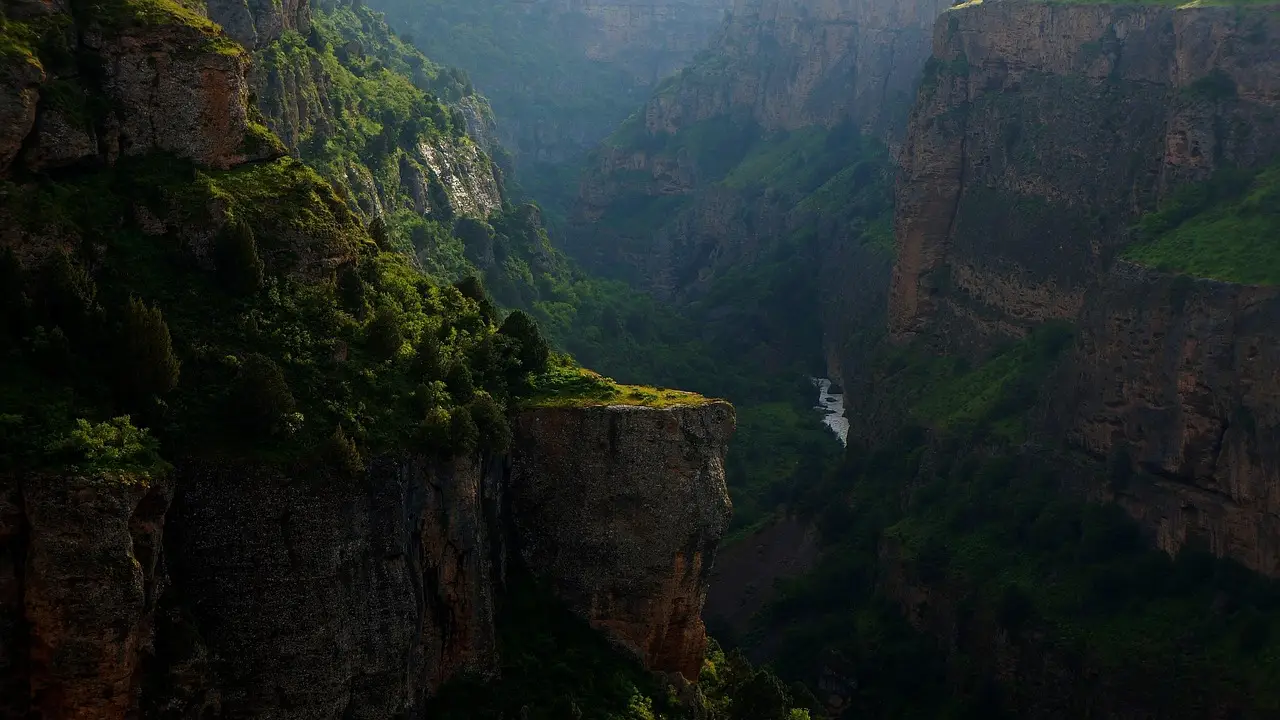
Until roughly 20 years ago, the only route to Beket-Ata ran up a faint trail through limestone-and-chalk cliffs. "There was no proper path then, but people made the difficult climb in the heat and wind," guide Yerzhan Nagmanov said. Pilgrims considered the arduous ascent, in his words, "was part of the pilgrimage." Stone stairs now ease the climb.
What does the architecture consist of?
The mosques sit scattered across the roughly 64,000-square-mile Mangystau desert in western Kazakhstan. Traveling between them, the distinction between architecture and geology collapses: walls, ceilings and floors are all variations of the rock from which each mosque was excavated. The rock-cut style grew out of nomadic building traditions. The buildings carve into caves, follow cliff contours and tunnel below ground.
Each complex honors a different Sufi master, the mystical branch of Islam. Those masters walked hundreds of kilometers across the desert with their families, spent years in prayer and contemplation, and were eventually buried at the sites they founded.
What survives at each site?
Shopan-Ata, named for a 12th-century Sufi teacher, holds a necropolis of more than 2,000 monuments, including domed mausoleums and kulpytas—ornately carved stone steles used as Kazakh gravestones. A shaft of daylight falls onto two sacred wooden poles inside the 12-chamber mosque. Local tradition directs pilgrims to recite a prayer and circle the poles three times counterclockwise so the spirits can hear them, and to tie strips of white cloth that symbolically bind a prayer to the site. Those customs likely derive from Shamanic and Tengrian practices of tying cloth to sacred trees and mountain passes, later merged with Muslim saint veneration. Legend holds that Shopan-Ata appeared to Beket-Ata in a dream, which makes this shrine a mandatory stop before the latter's mosque.
Beket-Ata, founded by 18th-century Sufi teacher Beket Myrzagululy, lies in a remote canyon roughly 170 miles from Aktau, the Caspian-side gateway to Mangystau. Narrow ceiling openings pull daylight into cool, dim chambers; one contains Beket-Ata's grave, another is associated with his sister, and separate prayer rooms serve men and women. A dining hall operates on a continuously replenished table: the mosque supplies freshly cooked meat free of charge, while visitors leave bread, sweets, tea, yogurt and jam for those who follow.
Shakpak-Ata, on the Tyub-Karagan Peninsula, is the oldest of the five. Its cruciform mosque is cut into a massive chalk cliff whose porous white surface—shaped millions of years ago when the region lay beneath the ancient Tethys Sea—resembles honeycomb. Drawings and inscriptions in Arabic, Persian and Turkic, some dating to the 18th century, record pilgrims who arrived long before 4x4s and Starlink.
Sultan-Epe overlooks the Caspian from beside a deep canyon threaded by a stream through mulberry, buckthorn and blackberry. Devotees revere Sultan-Epe as a protector of seafarers and fishermen. Local tradition names him the son of Hakim-Ata, a Sufi poet and disciple of Khoja Ahmed Yasawi, linking the shrine to the spiritual lineages of Shopan-Ata and Beket-Ata.
Karaman-Ata anchors a seven-hectare necropolis dotted with funerary monuments, some more than 1,000 years old. The mosque cuts into a small marl hill, where the temperature drops sharply on descent. A narrow passage leads to a circular room associated with Sufi devotional whirling.
What does access require?
Reaching each site still demands long drives across remote terrain with limited to no mobile coverage or fuel services. A sturdy vehicle and a trusted local guide remain essential; operators Red Maya Travel and Mangystau Tour 999 run guided 4x4 circuits of all five.
The UNESCO inscription now puts state-level scrutiny behind sites whose preservation previously rested on pilgrimage itself—rituals that continue around wells, under mulberry trees and at tables crowded with food and strangers.
Original: whc.unesco.org
More from Marcus Bennett
Show full bio
Correspondent covering money, funding and market shifts around construction industry, architecture, interior design at Built Current.
232 articles