Grand Junction's $82.1M Rec Center: What It Actually Costs
Grand Junction's $82.1 million rec center beat membership goals, but its fees, closures and competition with local gyms carry costs the 2023 ballot never spelled out.
- Section
- Urbanism & Planning
- Author
- By Elena Vasquez
- Filed
- Length
- 5 min read
Key takeaways
- The Grand Junction rec center cost $82.1 million and spans about 107,000 square feet, versus the $70 million, 83,000-square-foot concept on the 2023 ballot.
- The center reported 6,956 individual members as of Nov. 5, nearly matching the 6,978 projected.
- Resident adult memberships cost $504 a year, the highest among regional rec centers reviewed.
- Voters rejected Orchard Mesa Pool repair funding on Nov. 3, putting the pool on track for closure.
- The 2022 plan promised scholarships for low-income families; no publicly listed membership scholarship could be found.
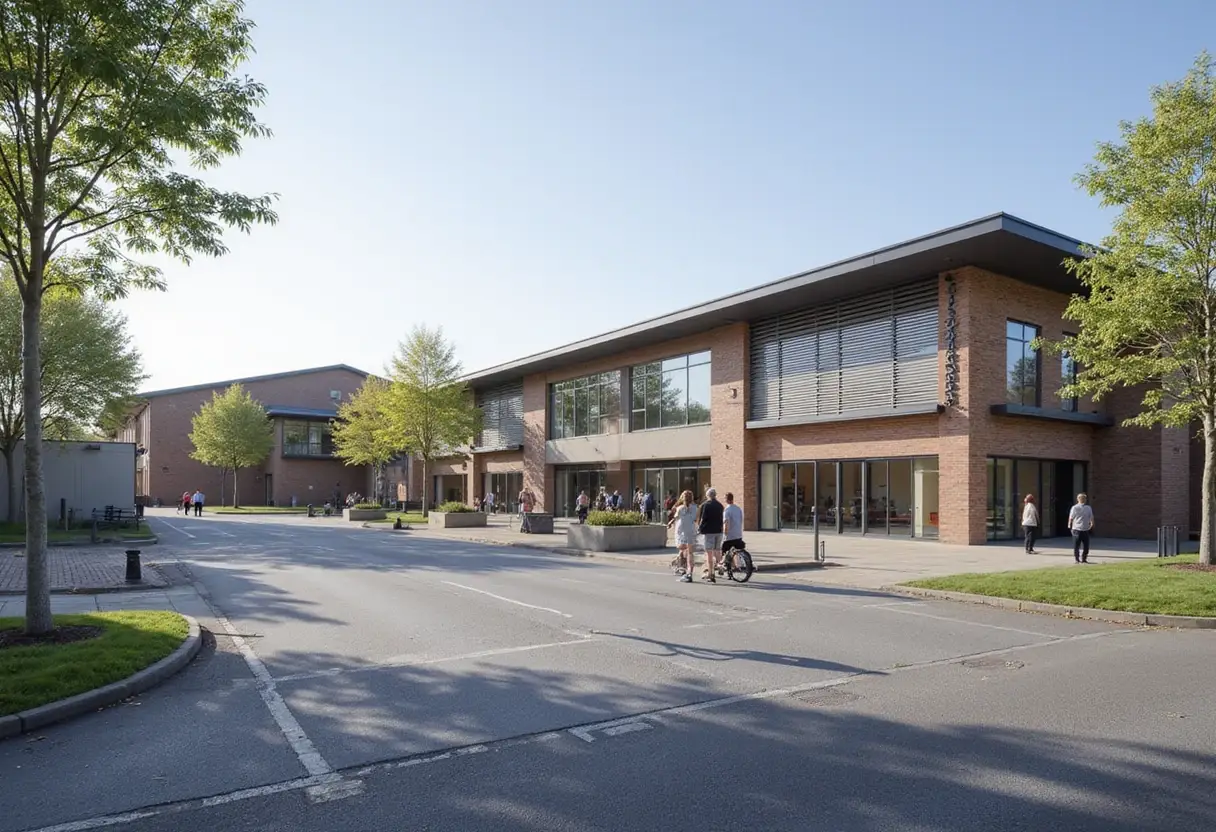
Grand Junction's new recreation center cost $82.1 million — roughly 17 percent more than the $70 million concept voters saw on the 2023 ballot — and its opening is reshaping the city's fitness, health care and aquatics landscape in ways the ballot language never mentioned.
The Grand Junction Community Rec Center opened Sept. 25. Membership sales are on pace to exceed projections, according to the city. But the facility's real price tag extends well beyond the voter-approved 0.14-percentage-point sales-tax increase: local gyms report losing customers, admission fees rank among the highest of regional community rec centers, and two longstanding facilities — Orchard Mesa Pool and the Red Barn at Lincoln Park — are being phased out without ever appearing in ballot language.
How big did the project get?
The scope grew substantially under former City Manager Greg Caton. In 2022, the city weighed a roughly 65,000-square-foot, $55 million option, then advanced an approximately 83,000-square-foot, $70 million concept ahead of the 2023 election. The finished building reached approximately 107,000 square feet — about 29 percent larger than the concept, including the clinic.
Three planned pools became five. Group fitness rooms and community rooms each grew from two to three. The ballot authorized up to $70 million in debt and said amenities "may include but not necessarily be limited to" those listed — language that didn't individually name features like the indoor climbing wall or the primary care and therapy clinic.
The $70 million figure limited borrowing, not the total budget. The city's published funding plan adds $5.8 million in cannabis-tax and dedicated sales-tax revenue beyond bond proceeds, plus a $4.5 million contribution from Intermountain Health St. Mary's Hospital and a $1 million state grant. St. Mary's also pays an annual lease for its space.
Is membership meeting expectations?
In written responses provided Nov. 5, Grand Junction Communications Manager Kelsey Coleman reported 4,396 total memberships covering 6,956 individuals — nearly matching the 6,978 members the city's financial model anticipated. The figure includes 2,271 SilverSneakers and Renew Active participants, whose fitness benefits come through participating health-insurance plans.
The city said sales were "on pace to well exceed" its initial goal. The center also recorded 35,693 admissions, including 10,734 day passes, and 52,316 total building visits counting events, clinic visits, community-wing use and tours. Pools, the climbing wall and the game hallway drew the heaviest use, while community and party rooms saw strong reservation demand.
What about the private gyms?
The competitive fallout is already visible. Cole Christensen, owner of Mesa Fitness in Grand Junction and Gold's Gym in Montrose, told the Daily Sentinel in July that his Montrose gym lost 32.8 percent of its membership after that city's rec center opened in 2017 — and never fully recovered it. Crossroads Fitness owners Dale and Paula Reece called Grand Junction's center direct competition while acknowledging its community benefits.
Parks and Recreation Director Ken Sherbenou, who previously oversaw development of the Montrose center, said rec centers can expand overall fitness participation over time, though private gyms will likely see near-term declines. As a compromise with private operators, he said Grand Junction doesn't plan to offer personal training. The city does offer yoga, Zumba, tai chi, indoor cycling, HIIT, weightlifting and SilverSneakers classes, among others.
Grand Valley Climbing owner Fabrizio Zangrilli said his business has seen fewer casual recreational visits. The overlap extends to health care: Intermountain Health's Matchett Park Clinic opened inside the building Sept. 28, offering physical therapy, aquatic therapy, rehabilitation and primary care. Kirby Richardson, who co-owns Tailwind Therapies with her husband Sean, said the city's St. Mary's partnership adds to pressure from large hospital systems on one of the region's few remaining independent therapy clinics — and that tax dollars are now supporting a competitor to smaller providers.
What does access cost?
A standard adult annual membership costs Grand Junction residents $504 — above Montrose and Fruita at $480, Durango at $415, Delta at $353.50 and Meeker at $280. The gap widens outside the city: $684 for elsewhere in Mesa County, $864 outside the county. A family of four pays $912 inside city limits versus $1,560 outside the county.
That geography hits Clifton hardest. A family there pays $324 more per year than a city-resident household, in a community where median household income is $52,100 — about 26 percent below Grand Junction's $70,080.
The city's rec center plan, adopted Nov. 16, 2022, stated the facility "must be affordable and financially accessible to the Grand Junction community at large" and that "scholarships will be available through the Parks & Recreation Department to ensure accessibility to the CRC for low-income families." Coleman said the city doesn't collect members' income data. The Business Times could not locate a publicly listed scholarship covering memberships or general admission; the city didn't respond to a follow-up question in time for publication.
What happens to the older facilities?
Voters rejected Issue 2B on Nov. 3 — a 0.07-point tax increase and up to $12 million in debt for Orchard Mesa Pool repairs — and the city says the pool, whose major systems have reached the end of their useful lives, will move toward closure. Red Barn recreation programming shifts to the new center under a 25-year agreement giving Colorado Mesa University the barn for football strength and conditioning. Neither change appeared in the 2023 ballot language.
City Manager Mike Bennett did reverse one closure: he announced Oct. 21 that the Senior Recreation Center will stay at 550 Ouray Ave. after residents objected. The city will retain roughly $100,000 in its recommended 2027 budget for the facility and develop a new agreement with the nonprofit operator by January.
How the center's membership surge and private-business losses balance out won't be measurable for some time — several local businesses contacted by The Business Times said it's still too early to tell.
Source: thebusinesstimes.com
More from Elena Vasquez
Show full bio
Senior reporter covering money, funding and market shifts around construction industry, architecture, interior design at Built Current.
370 articles