Key takeaways
- Communal tables dominated roughly 2009 to 2016; the pandemic made private dining the default for about 18 months.
- Meyer Davis completed booth-led projects at The Crossing at The Cooper Hotel, Charleston, and Bar Primi Penn District, New York.
- Sarita Posada's Supernova in London uses chrome, black and butter yellow inspired by 1970s American diners.
- Cafe Zaffri at The Twenty Two members' club in Union Square hosts power lunches in horseshoe booths.
By Priya Raman
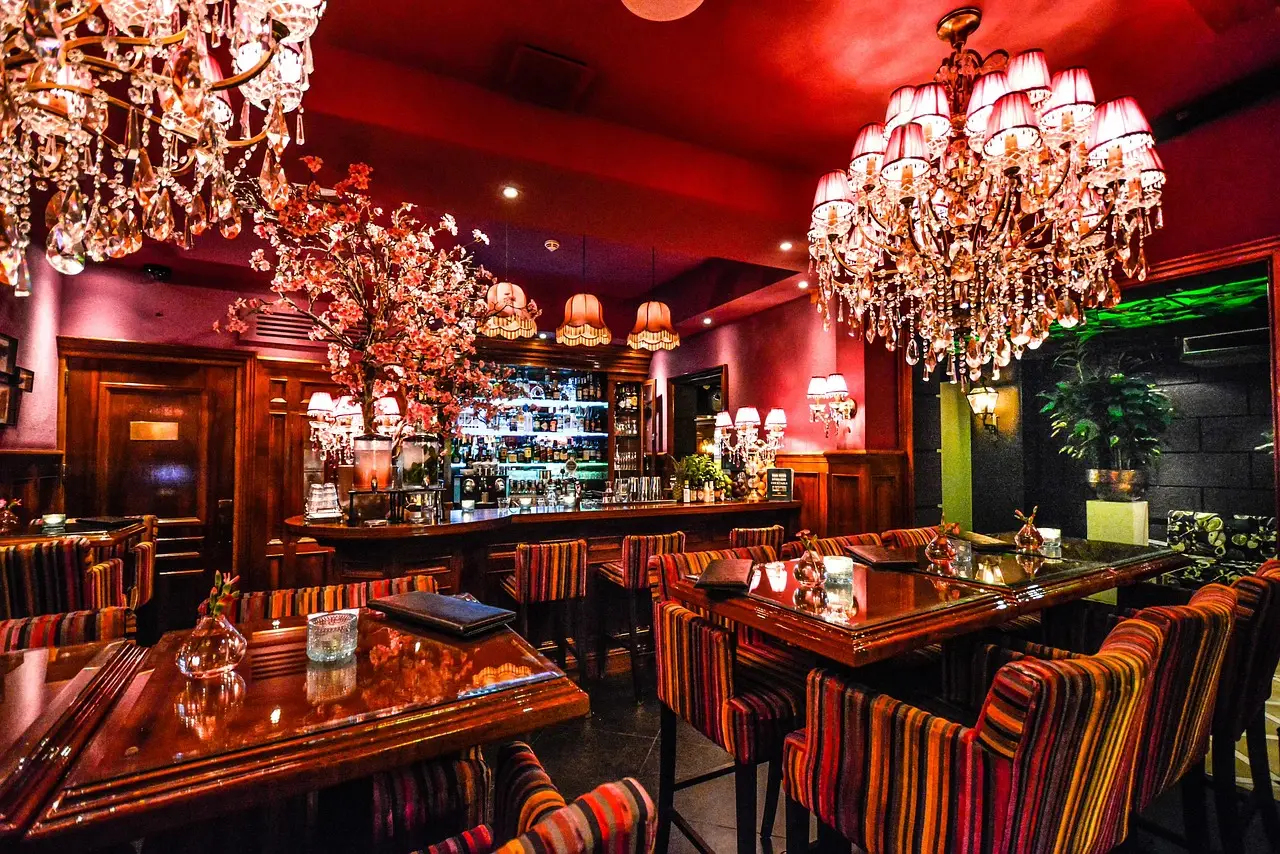
Restaurants, hotels and members' clubs are installing booths and banquettes "by the mile" this past year, in what industry watchers call a boom of never-before-seen proportions. The shift reverses a decade of communal-table dominance and signals a lasting change in how diners want to sit.
Anna Albury, designer and writer behind the newsletter Cool Stuff NYC, which she curates with her husband Garrett, put the appeal plainly: "When I walk into a restaurant and see a worn-in bright red-and-white striped booth, I already know it's going to be good." Her New York favorites include the coat-rack-clad booths at Long Island Bar in Cobble Hill, the cherry-red banquettes at Le Veau d'Or on the Upper East Side, and two-top booths at Carroll Gardens newcomer Trudie's.
What changed after 2020?
Communal tables reigned from roughly 2009 to 2016, a trend David Prior, founder of the travel company Prior, attributes to the farm-to-table movement, food leaders like Alice Waters, and Jim Denevan's roving dinner series Outstanding in the Field. The pandemic broke that pattern. Private dining became the default for roughly 18 months. "People wanted to be hermetically sealed," Prior said.
He now calls the current moment "alone-together": "We want to have our intimate moments, but we also want to feel that we're part of a similar thing." At the launch party for his podcast, Traveling Through, he watched groups cluster in booths "like small islands within a greater archipelago." His read: "It's all about connection right now, because people are so disconnected."
Who is driving the demand?
Designer Sarita Posada, whose New York firm is behind Supernova in London plus Cherry and 74 Duke, says booths now arrive on the brief as a starting point, not an afterthought. "I think people are a little fatigued overall on overexposure, whether that be digitally or when they go out," she said, calling booths a way to carve out your own piece of real estate in a room.
Ryan Harris, owner of September Hospitality and Sirrah New York, splits the market into two camps: "Couples who want the intimacy, and business diners who want the semi-round, Hollywood-style booth so they can all see each other instead of squaring off across a table." With the power lunch back, booths deliver privacy without a private dining room. Cafe Zaffri, the Mediterranean restaurant inside The Twenty Two members' club in Union Square, welcomes that crowd in horseshoe booths; designer Leigh Salem of Post Company says guests "want to experience the energy of a lively dining room" while keeping "space for real conversation and connection."
Gray Davis, co-founder of Meyer Davis, which recently completed booth-centric projects including The Crossing at The Cooper Hotel in Charleston and Bar Primi Penn District in New York, agrees: "There's a growing preference for spaces that offer an open, social energy while still maintaining a sense of comfort and privacy."
How are designers reinventing the booth?
The new wave adds modern twists to a storied form:
- At Supernova, Posada referenced 1970s American diners in chrome, black and butter yellow.
- At Auric Room 1915, the supper club and speakeasy at Lone Mountain Ranch in Big Sky, cowhide booths keep the space on brand.
- At Marcel, the Roman and Williams-designed restaurant in the Breuer building, chocolate-brown banquettes circulated widely on Instagram.
- At Hotel Corazon in Mallorca, designer Tatjana von Stein installed bespoke round booths of powder-coated metal, made in Portugal with the hotel's sun motif.
Booths also solve functional problems. At Demo, the West Village institution, co-owner Jacob Nass calls booths "one of the best ways to utilize a narrow pathway." At Bufon, the team's second restaurant, blue perimeter banquettes create an almost conversation-pit feel.
Designing one is technical. Davis says Meyer Davis evaluates material durability, placement, seat height, dining durations and group sizes, using typologies from perimeter banquettes and curved semi-enclosed booths to seating integrated into architectural millwork (custom built-in woodwork).
At One4One, the sports bar from Dylan Hales and Ronnie Flynn, and at their first venue The Flower Shop—where a brass plaque reads "Captain's Quarters" above the corner booth—booths anchor a mission to "create a true local hang." Flynn's verdict carries the trend: "A booth creates comfort and, in a way, commitment. You get a booth when you mean it." For operators planning 2025 openings, that commitment is now the brief.
Source: vogue.com
More from Priya Raman
Show full bio
News editor covering people, launches and day-to-day practice in construction industry, architecture, interior design at Built Current.
307 articles